Some rugs are simple to clean. Others need much more care before anyone should add water, cleaning solution or stain treatment.
A rug can look sturdy on the floor, but the real risk may be hidden in the dyes, fibres, backing, fringe, old repairs or previous treatments. This is why professional rug cleaning should start with inspection, testing and honest advice, not just a cleaning machine.
For homeowners in Cambridge, Ely, Newmarket, Saffron Walden, Cambourne, Huntingdon and the surrounding area, the most useful thing to know is this: a “risky” rug is not always a bad rug. It may simply need the right method, a slower process or a clear conversation before cleaning begins.
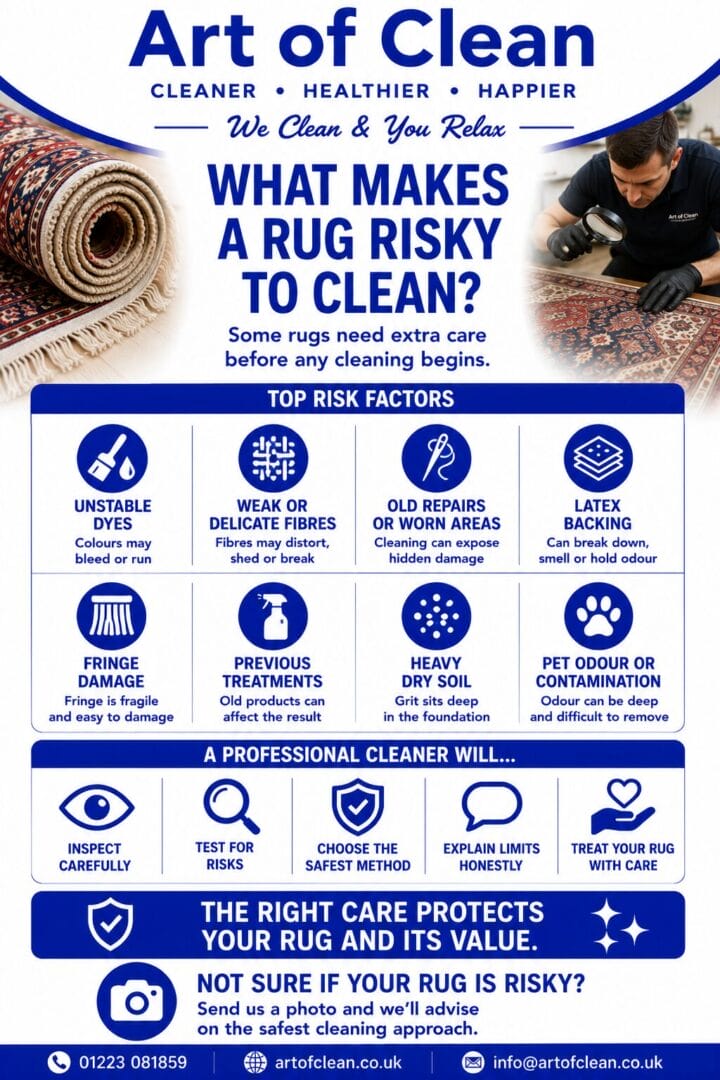
The short answer: what makes a rug risky? A rug becomes risky to clean when there is a higher chance that cleaning could cause dye movement, fibre change, shrinkage, fringe damage, backing problems, odour issues or visible changes that cannot be fully reversed.
That risk is usually linked to one or more of these:
| Risk factor | Why it matters | What a careful rug cleaner should do |
| Unstable dyes | Colours may bleed or migrate when wet | Test dye stability before choosing the method |
| Weak or delicate fibres | Fibres may distort, shed, flatten or break | Identify the fibre and avoid harsh action |
| Old repairs or worn areas | Cleaning can expose damage that soil was hiding | Inspect and explain limits before work starts |
| Latex backing | Latex can break down, smell or hold contamination | Check backing condition and manage expectations |
| Fringe damage | Fringe is often more fragile than the rug face | Clean fringe carefully and avoid aggressive scrubbing |
| Previous treatments | Stain products or old cleaning attempts can affect the result | Ask what has already been used |
| Heavy dry soil | Grit can sit deep in the rug foundation | Dust the rug before washing where suitable |
| Pet contamination or odour | Odour can sit deep in the fibres, backing or foundation | Treat where suitable, but avoid guarantees |
This is why two rugs of the same size can need very different cleaning plans.
-
Dye movement and colour run
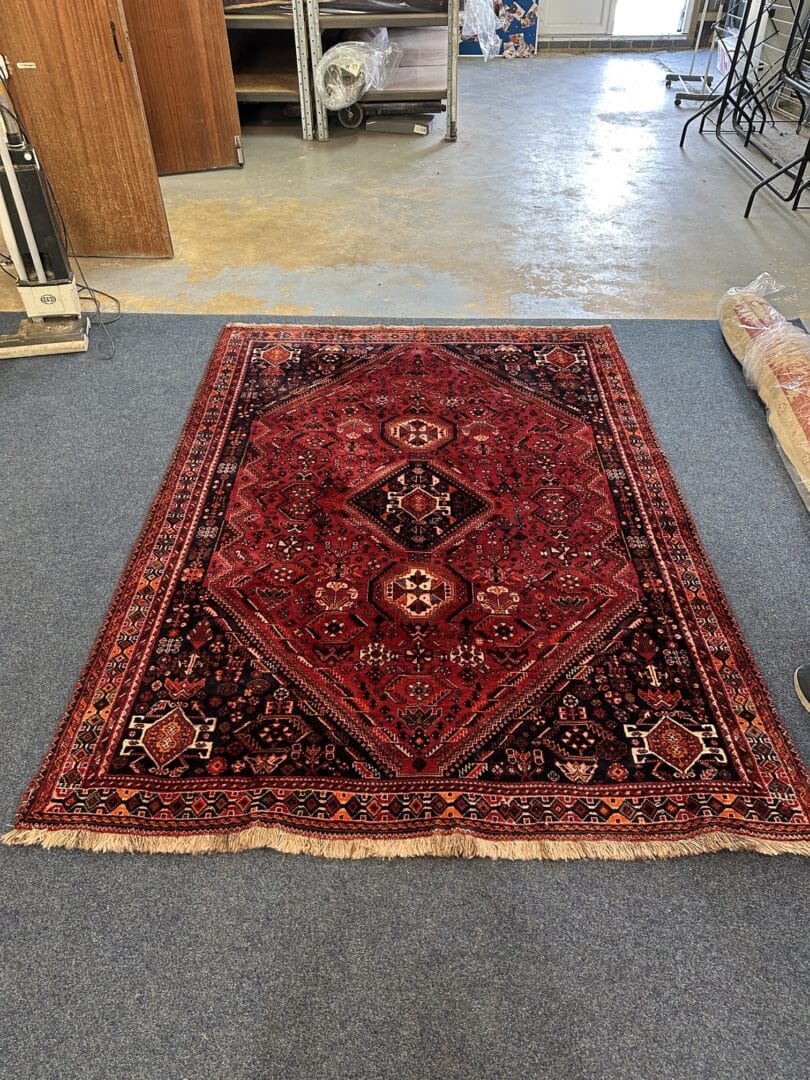
Dye movement is one of the most important rug cleaning risks. If a rug’s dyes are unstable, colour can move when the rug becomes wet. Sometimes one colour bleeds into another. In other cases, a dye may transfer onto fringe, lighter areas or neighbouring fibres.
This can happen with handmade rugs, older rugs, some wool rugs, some viscose or silk rugs, and rugs that have already been affected by water, pet accidents or previous cleaning.
A careful rug cleaner should not assume that a rug is colour safe just because it has been cleaned before. Dye stability can depend on the fibre, dye type, age, previous exposure, previous cleaning products and how the rug has been stored or used.
What this means for you: if your rug has strong reds, dark blues, deep borders or pale fringe, it is worth asking whether dye testing will be carried out before cleaning. This does not remove every risk, but it helps guide the safest method.
We wrote this blog to explain how to tell if your rug is colour safe before cleaning
-
Fibre weakness and delicate materials
Not every rug fibre behaves the same way.
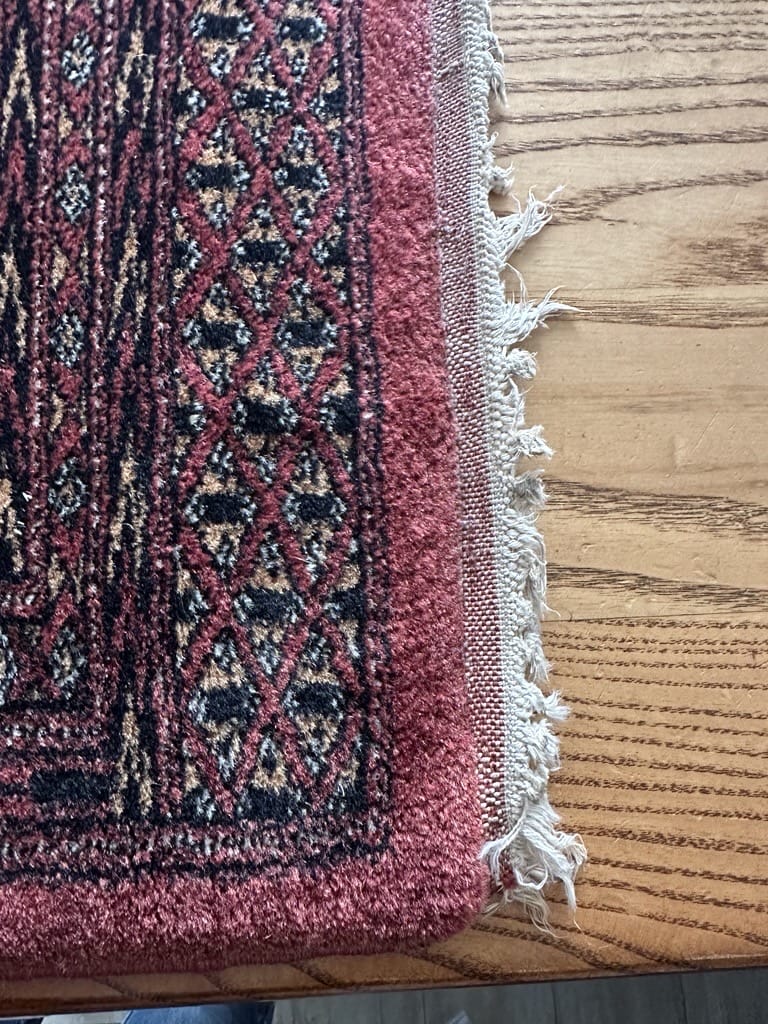
Wool is often strong and practical, but it still needs the right cleaning method. Silk, viscose, art silk and some delicate blends can be much more sensitive to moisture, friction and cleaning chemistry. Some fibres can flatten, distort, yellow, lose texture or become weaker if handled too aggressively.
Older rugs can also become weaker over time, especially in busy walkways, around edges, near doorways or where furniture has rubbed the pile.
This is why specialist rug cleaning is not only about removing dirt. It is about understanding how the rug may behave during cleaning.
What this means for you: if your rug is silk, viscose, antique, inherited, handmade, sentimental or difficult to replace, pause before trying a home cleaning product. A quick test and inspection may prevent a bigger problem.
-
Old repairs, worn areas and hidden damage
Soil can hide a lot.
A rug may arrive looking dull, dusty or stained, but once cleaning begins, older issues can become more visible. These may include worn pile, previous dye bleed, old moth damage, weak edges, loose stitching, repaired holes, stretched areas or damage caused by previous cleaning attempts.
This does not mean cleaning caused the original problem. It may simply reveal what was already there.
A good professional rug cleaner should look for these signs before cleaning and explain them clearly. This helps you understand what may improve, what may remain and what might need repair before or after cleaning.
This blog talks more in depth about Rug repairs before cleaning: why it matters.
-
Latex backing problems
Latex backing can make some rugs more complicated.
Over time, latex can break down, become powdery, smell unpleasant, hold odour or react poorly to moisture. Some rugs with latex backing are also more difficult to dry thoroughly. If there has been pet contamination, flooding, damp storage or previous overwetting, the backing may be part of the problem.
This is especially important with odour work. A rug may smell clean on the surface but still hold odour in the backing or foundation.
What this means for you: if your rug has a rubbery, crumbly or powdery backing, or if it smells musty underneath, mention this before booking. It may affect the cleaning route and the result that can honestly be expected.
-
Fringe damage and browning
Fringe often needs a different level of care from the main body of the rug.
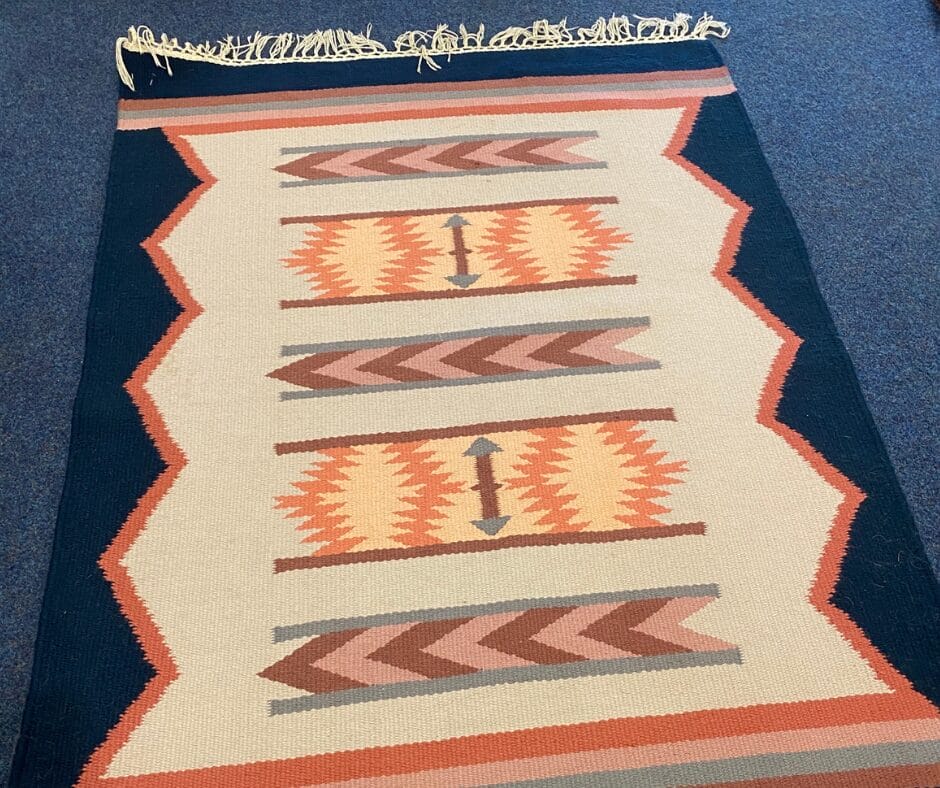
It may be cotton, weakened by age, discoloured, previously treated, sun-damaged, worn by vacuuming or affected by spills. Fringe can also brown if moisture and residues move during slow drying.
Scrubbing fringe harshly can make it worse. Pulling fringe into a vacuum can damage it. Trying to bleach fringe at home can create colour loss or weaken the fibres.
A careful rug cleaning process should inspect the fringe before cleaning, treat it separately where suitable and dry it properly.
What this means for you: if the fringe is important to the look of the rug, do not scrub it with household products before asking for advice. Take a photo, explain what happened and let the rug cleaner assess it.
-
Previous stain products and cleaning attempts
Many people try to help before calling a professional. That is understandable. A spill happens, panic sets in, and the nearest stain remover, washing-up liquid, powder or carpet spray comes out.
The difficulty is that previous products can change the situation. Some products leave residue. Some spread the stain. Some affect the dye. Some bleach or chemically change the fibre. Some mask the mark for a while, then it reappears.
Brad, one of Art of Clean’s senior rug cleaning technicians, often sees rugs where a stain has already been treated before the rug arrives. The important point is not to blame the client. It is important to understand the starting point properly so expectations can be set before work begins.
What this means for you: tell the rug cleaner what has already been used, even if you are not sure it helped. Honest information gives the technician a better chance of choosing the safest route.
Useful internal link: Why every rug stain needs a different treatment
-
Heavy dry soil deep in the rug
A rug can hold a surprising amount of dry soil, grit and dust deep inside the pile and foundation.
This matters because dry soil is not just harmless dust. Grit can act like tiny sandpaper inside the fibres. If a rug is washed before dry soil is removed properly, the cleaning process can be less effective.
This is one reason our rug cleaning service is carried out off-site for many rugs, where dusting, washing, rinsing and drying can be managed with more control.
What this means for you: a rug that looks only slightly dull may still need proper dust removal before washing. This is especially true for rugs in hallways, under dining tables, near doors, in pet homes or in busy family rooms.
-
Pet contamination, odour and previous damp
Pet accidents, leaks, flood water and damp storage can all make a rug more difficult to clean.
The visible mark may only be part of the issue. Moisture and contamination can move into the fibres, backing and foundation. Odour may remain even after the surface looks cleaner. Some dyes may already have moved. Some fibres may have changed. Some backing materials may hold onto smell or moisture.
Professional treatment may improve the rug, but odour removal should not be promised in every case.
What this means for you: if a rug has been affected by pets, damp or flooding, say so when you ask for a quote. If a rug has been affected by pets, damp or flooding, it may need specialist rug treatment rather than a standard clean.
The rug may need specialist treatment, and in some cases, the team may need to inspect it before confirming what is possible.
Why inspection matters before rug cleaning
A proper rug clean should not begin with the question “How fast can we clean it?”
It should begin with:
- What is the rug made from?
- Are the dyes stable?
- Is the fringe sound?
- Has the rug been repaired before?
- Is the backing safe to clean?
- What stains or odours are present?
- What has already been used on it?
- Is the rug suitable for water-based cleaning, low-moisture cleaning or a more cautious route?
This is where experience matters. A system helps, but rug cleaning still needs judgement. Some rugs are straightforward. Some need testing. Some need a senior technician’s opinion. Some may be too risky for a normal clean.
That honest assessment protects the rug and helps you make a better decision.
Can risky rugs still be cleaned?
Often, yes. A risky rug does not automatically mean “do nothing”.
It may mean:
- The rug needs dye testing first.
- The cleaning method needs adjusting.
- The fringe needs separate care.
- The rug should be cleaned off-site rather than in the home.
- The result should be described as an improvement, not guaranteed restoration.
- A repair may be worth considering before cleaning.
- Specialist treatment may be needed for odour or contamination.
- The safest advice may be not to proceed with a normal clean.
That last point matters. A trustworthy rug cleaner should be willing to slow down, explain the concern and avoid over-promising.

What you can safely do before asking for help
If you are worried about a rug, keep the first steps simple.
Blot fresh spills gently with a clean, absorbent towel where suitable. Avoid scrubbing. Avoid heat. Avoid soaking the rug. Avoid using several products one after another. Take photos of stains, fringe damage or backing concerns before adding anything else.
If the rug is wool, silk, viscose, antique, inherited, sentimental, heavily stained or has a delicate fringe, it is usually safer to ask for advice before treating it at home.
Local rug cleaning advice in Cambridge and nearby areas
Art of Clean cleans rugs for homes around Cambridge and the surrounding area, including places such as Ely, Newmarket, Saffron Walden, Cambourne, Huntingdon, Waterbeach, Histon and nearby villages.
The rug cleaning facility in Chittering allows rugs to be collected, inspected and cleaned with more control than a quick in-home clean can usually provide. For many everyday rugs, that means better dust removal, rinsing, moisture removal and drying. For more delicate rugs, it means the team can slow down and assess the safest option before work begins.
Whether your rug is an everyday family rug, a hallway runner, a wool rug under the dining table, an inherited Persian rug or a pet-affected rug, the useful question is not simply “Can it be cleaned?”
The better question is: What does this rug need, and what should we check before cleaning it?
Collection, drop-off, and local options…
Art of Clean offers a rug collection and return within a certain radius of our rug cleaning facility. If you are outside that area, it is still worth getting in touch, as we may be able to suggest a practical option.
For example, we work closely with Farthing’s in Cambridge and Trumpington. In some cases, clients can drop rugs off with them, and we can arrange collection from there as part of the cleaning process.
If you are not sure what is easiest, give us a call, and we can talk through the options before you decide what to do next.
Quick Recap…
Need advice about a rug?
If you are unsure whether your rug is safe to clean, send a few photos and tell us what you know about it. Include the front, back, fringe, label if there is one, stains, worn areas and anything that has already been used on it.
We can then advise on the next sensible step, whether that is professional rug cleaning, specialist treatment, repair advice or a more cautious inspection first.
You can also explore more rug care advice in our Knowledge Centre, including articles on dye safety, rug repairs and stain treatment.