You can look at a rug stain and think, “I’ll just sort that quickly,” only for the colour to shift, a darker patch to appear, or the dye to start travelling. It feels like the rug has been ruined in minutes.
Colour run is one of the main reasons rugs go wrong with DIY cleaning. The good news is that there are early warning signs and a clear way to test risk before any water or product comes into contact with the fibres.
Key takeaways
- Colour safety is about dye stability during washing, rinsing, and drying.
- DIY spotters often create dye movement or residue that causes later patchiness.
- A simple white cloth test can reveal colour transfer risk.
- Viscose and strongly dyed rugs need extra care.
- Professional dye testing changes the plan before damage happens.
What “colour safe” actually means
A rug is colour safe when the dyes stay put during cleaning, rinsing, and drying. That depends on the dye method, the fibre type, the age of the rug, and what has happened to it over time (sunlight, previous cleaning products, spills, furbaby accidents).
Some rugs cope well with careful wet cleaning. Others can release dye quickly, especially when certain household spotters or high pH products are used.
The biggest colour run risks we see
1) Strong dyes and handmade rugs
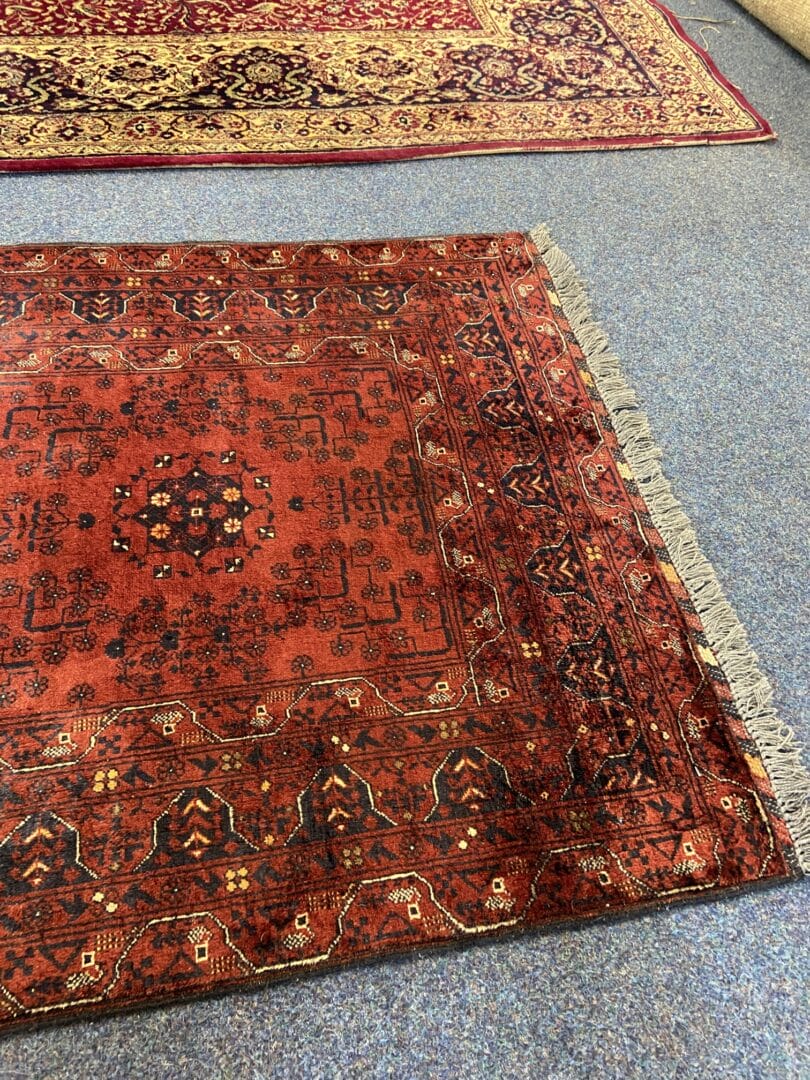
Deep reds, navy, black, and some bright colours can be more prone to dye movement, especially in older or handmade pieces.
2) Viscose and “silk look” rugs
Viscose can react unpredictably to moisture and spotting. If you have a viscose rug, it is worth reading our guide before attempting anything at home.
3) Previous DIY attempts
Once a rug has been treated with supermarket stain removers, bleach-based products, or strong deodorising sprays, the dye stability can change. You can also end up with residue that keeps reacting when moisture is added again.
4) Pet accidents
Urine can affect dyes and fibres, and it can also create “reactivation” later when the rug gets wet. This is one reason we treat odour and contamination as a specialist job, not a quick spray. If this sounds familiar, our specialist rug treatment page explains the options, including colour repair where appropriate.
Quick checks you can do at home, before you touch a stain.
You do not need fancy equipment to spot risk. You do need to slow down and check a few things.
First, look for any existing colour movement. Check the lighter areas of the pattern, the fringe, and any pale borders. If you can already see faint “shadowing” into a lighter colour, treat it as higher risk.
Next, check the rug label, if it has one. Materials like wool, cotton, silk, viscose, and blends can all behave differently. If it is unlabelled and feels valuable, treat it as unknown and avoid DIY wet cleaning.
Finally, do a simple transfer check in an inconspicuous spot. Lightly dampen a clean white cloth with cold water, press it onto the rug for 10 to 15 seconds, then lift. If you see colour transfer, stop. Do not keep testing across the rug, and do not apply stain remover “to see if it improves”. At that point, the safest move is professional advice and dye testing.
What to do straight after a spill, without making dye bleed more likely
A spill creates panic, and panic leads to rubbing, hot water, and strong products. Those three cause most of the problems.
Start by removing solids with a spoon or a dull-edged tool. Then blot, do not rub, using dry white cloths or kitchen roll. Keep blotting until you no longer lift liquid.
If you need moisture, use the least amount of cold water on the cloth, not pour it onto the rug, and blot again. Stay away from heat, steam, and “all-purpose” sprays. Many leave residue that attracts soil and that can also affect dye stability on the next clean.
If the rug is still damp after blotting, improve airflow and keep foot traffic off it. A damp rug left to dry slowly can develop other issues, including distortion. If you have ever seen rippling or waves after cleaning, our article on wavy rug after cleaning explains why it happens and what helps.
Why DIY spotters cause colour bleed
Most DIY products are made for carpets, not rugs that have complex dyes, natural fibres, and are hand-finished. Some are far too alkaline, some even contain brighteners, and some break down soiling in a way that carries dye with it. Even when the colour does not visibly run at the time, residues can react later when the rug is cleaned properly.
That is why a “successful” spot clean can still cause patchiness weeks later, especially on patterned rugs.
What a professional colour test looks like
Professional rug cleaning should include dye testing before the main wash is carried out, especially on rugs with strong colours, unknown history, or higher value.
On our professional rug cleaning page, you can see dye testing listed as a defined step in the process.
In practice, dye testing checks whether colour transfers under controlled moisture and mild cleaning conditions. If a colour is unstable, the cleaning plan changes. That might mean different chemistry, different moisture control, different handling, or, in some cases, advising against wet cleaning until other steps are taken. The goal is to avoid a situation where one unstable colour affects the entire rug.
When to stop DIY and get the rug assessed
If any of these apply, it is worth stopping now and getting some advice…
- The cloth test lifts colour.
- The rug is viscose, silk, antique, handmade, or even unlabelled.
- You can see existing dye shadows in lighter areas.
- The stain is from wine, coffee, pet accidents, or anything oily.
- You treated your rug with multiple products already.
You can send photos in for an assessment, the simplest route is our contact page. Include a photo of your whole rug, a close-up of the stain, and one of the back if you can.
FAQs
Can you safely clean a rug if the colours do not transfer on your cloth test?
It is a good sign, but it isn’t a guarantee. Some dyes hold in water, then shift with cleaning solution, agitation, or slow drying. If the rug is valuable or unknown, professional dye testing is still the safer route.
Does colour run mean the rug is ruined?
Not always. Early action matters. In some cases, colour work or correction is possible, which is one reason specialist treatment exists.
Why do some rugs look patchy after spot cleaning?
Patchiness often comes from uneven moisture, residue left in the fibres, or dye movement in one section. The rug can look cleaner in places, yet the finish looks inconsistent.
If you want an overview of recognised training and standards in carpet and rug care, see WoolSafe.