You can be ready to finally get a rug cleaned, and still hesitate because something looks “not quite right”, a loose edge, a thinning patch, frayed fringe, or a small hole that keeps catching the hoover.
Many people assume cleaning is the fix that will sort everything out. With damaged rugs, cleaning can put pressure on the weakest areas and make the problem spread. For rugs that are handmade, older, or simply well-loved, the safer order is often to repair first, then clean, which is exactly what we cover in our guide to rug cleaning and rug repair in Cambridge.
Key takeaways
- Damaged rugs often need repair before cleaning to avoid worsening weak areas.
- Fraying edges, fringe loss, holes, moth damage, and pet damage are common warning signs.
- A stable rug cleans more evenly and is easier to handle safely.
- We can help with both repairs and professional cleaning, in the right order.
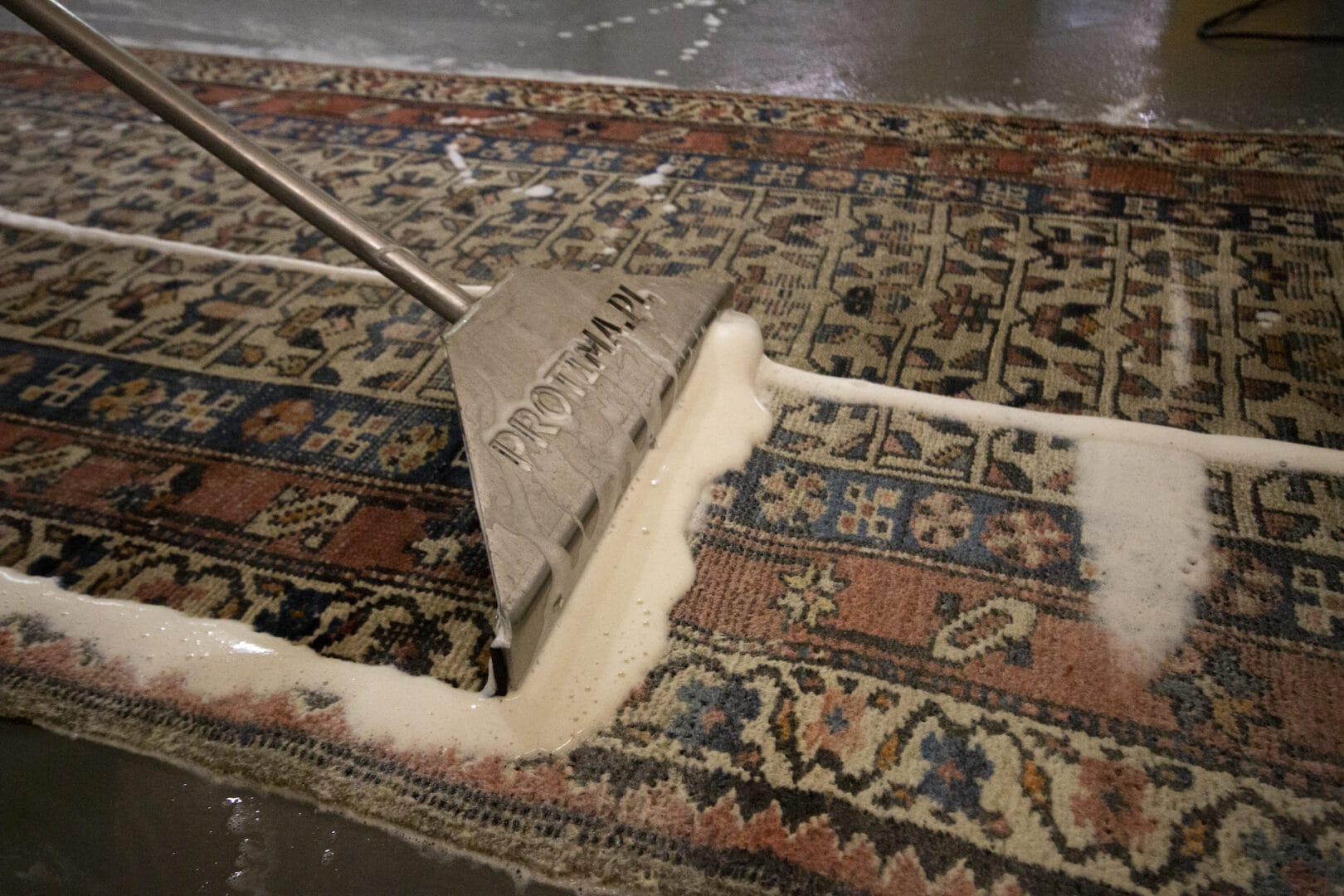
Why cleaning a damaged rug can make things worse.
A rug is not just a surface… it is a structure. It has fibres, edges, ends, and a foundation holding everything together. When that structure is compromised, even careful cleaning can shift tension into the weakest parts.
- Loose edges can unravel during handling and washing.
If the binding is failing or the edge stitching is loose, the edge can continue to fray while the rug is being moved, washed, and dried. That can mean more fibre loss and a bigger repair afterwards.
Repairing the edges first stabilises the perimeter, so the rug can be cleaned and handled without strain.
- Fringe damage is rarely just cosmetic.
On many rugs, fringe is an extension of the foundation. If it is thinning, tearing away, or tangling badly, the end of the rug can start to loosen too. Vacuuming and movement during cleaning can aggravate this if the fringe is already weak.
Securing or repairing the fringe first helps protect the structure during the clean.
- Holes & thin patches can spread under movement.
Sm all holes, splits, and worn areas often expand when fibres flex. Cleaning involves controlled agitation and water flow, even when done carefully, and that movement can widen damage that previously looked “fine enough”.
Stabilising and repairing weak areas first helps stop that creep. It also gives you a better result afterwards, because the rug can be cleaned evenly without having to tiptoe around fragile sections.
- Some rugs need colour checks before any wet cleaning.
If your rug has a dye bleed risk, strong dyes, prior DIY attempts, or patchy colour changes, cleaning needs a careful plan. Colour testing and fibre assessment reduce the chance of colour transfer and uneven results.
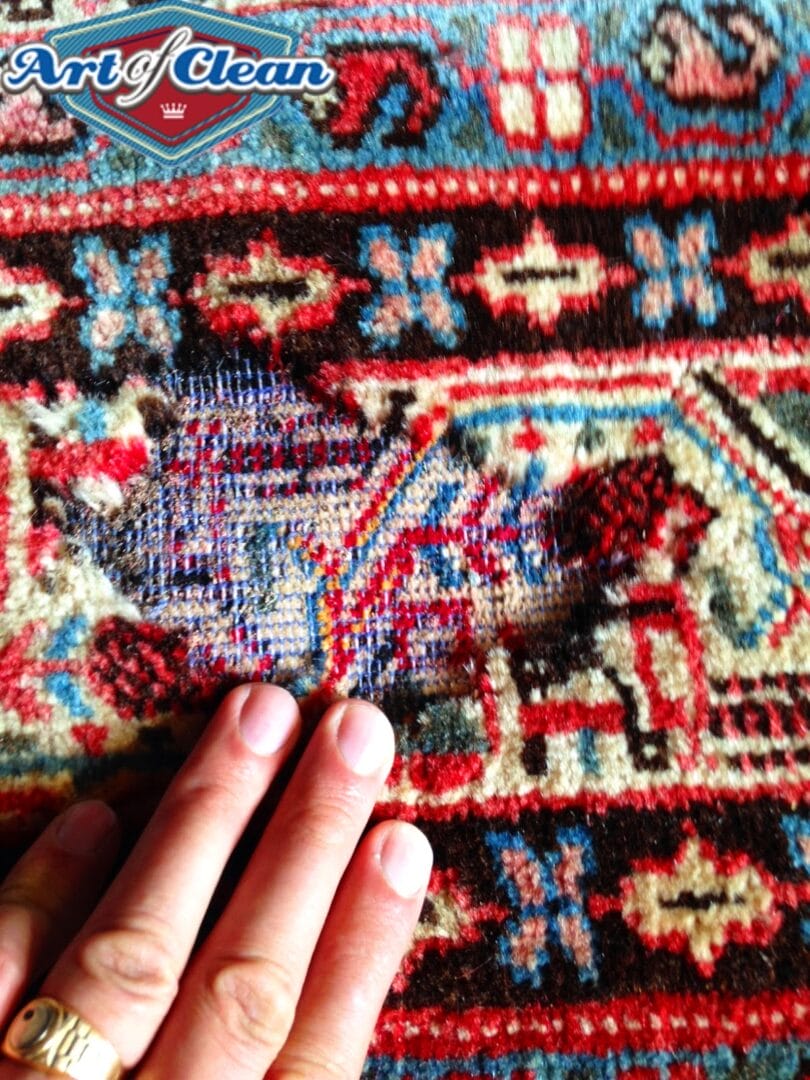
What counts as “damage” that should be repaired first
People often think only a large tear counts. In reality, early signs are the ones that benefit most from timely repairs.
Look out for fraying edges or loose binding, fringe thinning, holes, worn-through patches, or a rug that no longer sits flat. Moth issues are another common one, and if you suspect it, our article on moth damage in rugs explains what to look for and what tends to make it worse.
Repairs first protect the cleanliness you are paying for
A clean rug can make the whole room feel fresher. If the structure is already failing, you can end up with a rug that is clean yet still fragile, or newly worsened around the edges and ends.
Repairing first reduces the risk of weak points unravelling during cleaning, helps achieve a more even result, and helps protect the rug’s lifespan.
Our approach is inspection, stabilisation, and then we go in with the cleaning.
If a rug looks damaged, it needs a plan, not guesswork.
We start by checking the construction (hand-knotted, tufted, machine-made), the foundation, edges, fringe, and any visible risk areas. Once the rug is stable, we move on to professional rug cleaning using a method suited to the fibres and construction, followed by controlled drying and finishing.
If you are comparing providers, it also helps to understand what is included and how it is priced. Our page sets this out clearly.
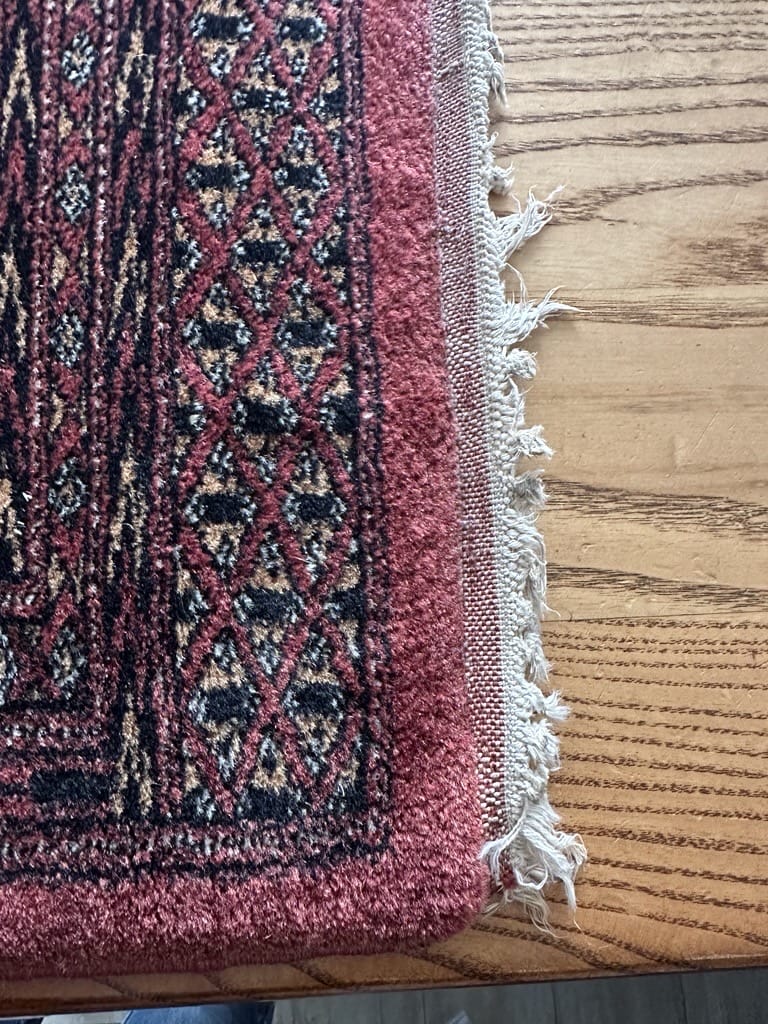
Damaged rug? We can help with repairs and cleaning.
If you have been delaying rug cleaning because you are concerned about damage, the first step is to identify what is structural and what is cosmetic.
Many repairs are straightforward when handled early. If your rug needs both repair and cleaning, we can manage the full process in the right order, so the damage does not worsen. To get an assessment, the simplest next step is to use our Contact Form and send photos of the front and back, plus a close-up of the damaged area and the fringe or edge.
If you are comparing options, here is what to check
When rugs are involved, the outcome depends on what happens before the cleaning starts.
Ask whether the rug is inspected properly, whether colour stability is checked when needed, how damage is stabilised, and how drying and finishing are handled so the rug does not come back distorted.
FAQs
Should a rug be repaired before cleaning it?
If there is fraying, loose binding, damaged fringe, holes, or thinning areas, repairs first are often the safer option. Stabilising weak spots reduces the chance of damage spreading during cleaning.
Can cleaning fix frayed edges or damaged fringe?
Cleaning can improve appearance, yet it does not rebuild structure. Edges and fringes usually need repair work to keep the rug stable.
What if I am not sure whether the damage is serious?
A quick assessment, often from photos, can usually identify whether a rug needs stabilising before cleaning, especially around the edges and ends.
Is it worth repairing an older or handmade rug?
If it has sentimental value, is handmade, or suits your home well, small repairs can be a sensible investment. Early repairs often cost less than waiting until damage spreads.
Next step
If you want an assessment, send photos of the front and back, plus a close-up of the damaged area and the fringe or edge. Add the rug size and any details you know (material, age, whether colours have ever run).
For background on recognised training and standards in carpet and rug care, see WoolSafe.