Oil and grease stains can be frustrating because they do not always look serious at first.
A small patch of cooking oil.
A dropped bit of takeaway food.
Grease walked in from your shoes.
A mark near the dining table after a family meal.
At first, the rug may only look slightly darker in one place. You might blot it, clean it, leave it to dry, and think the worst has passed.
Then the mark starts to show again.
The area looks darker than the rest of the rug. It may feel slightly sticky. Dust and everyday soil seem to collect there more quickly. After a while, the stain can look worse than it did when the spill first happened.
That is one of the reasons oil and grease stains need careful advice rather than quick promises.
Quick answer
Oil and grease stains are difficult because oily residue clings to rug fibres and can keep attracting dirt long after the original spill. The final result depends on the rug fibre, dye stability, how long the oil has been there, what has already been used on it, and how deeply the contamination has travelled into the rug.
Some oil stains can be removed well. Some can be improved. Some may leave lasting darkening, especially if the rug has already been scrubbed, soaked, or treated with the wrong product.
If you are dealing with a different type of rug stain, our main guide explains why stains need different treatment: Why Every Rug Stain Needs a Different Treatment.
Why do oil stains often come back?
Many water-based spills dry out or leave a visible mark that stays roughly the same.
Oil behaves differently.
It can cling to fibres, sit inside the rug pile, and leave behind a residue that is difficult to rinse away fully without the right process. That residue can then act almost like a magnet for soil.
This is why a grease stain may seem to disappear after a quick clean, then slowly darken again over the following days or weeks.
The rug is not necessarily getting dirty in a normal way. The oily area is simply holding on to more dust, grit, and soil than the surrounding fibres.
That can be very annoying for clients because it feels as though the stain is winning, even after they have tried to deal with it.
Why DIY cleaning can make grease marks worse
Most people try to clean an oil stain quickly. That is completely understandable.
The problem is that rugs are not all made in the same way, and oily marks do not respond safely to every household cleaner.
Washing-up liquid is a common first attempt because it is associated with grease. On a plate, that makes sense. On a rug, it can create a new problem if it is not fully rinsed away. Leftover detergent can stay sticky, attract more soil, and make the patch look dark again.
Scrubbing can also push the oil further into the fibres or spread it across a wider area. Too much water can affect the backing, fringe, dyes, or structure of some rugs.
The team often sees stains that have already been treated before professional help is requested. Clients are usually trying to do the right thing, but several products, heavy scrubbing, or over-wetting can make treatment more difficult later.
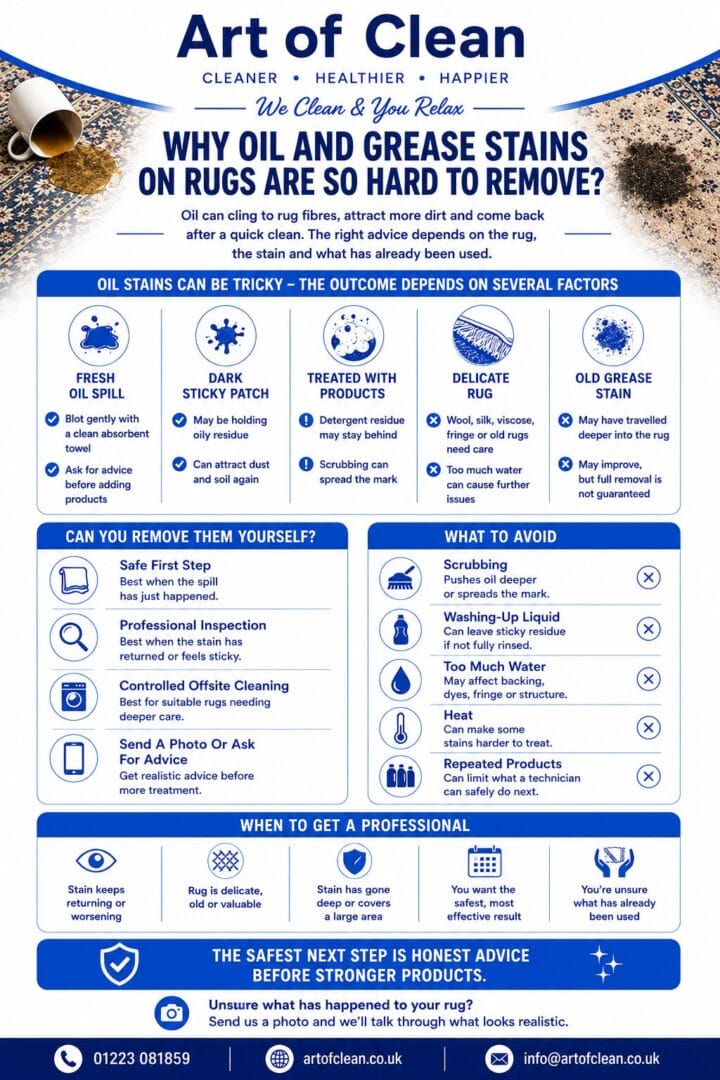
The safest first step is usually to pause, blot gently with a clean absorbent towel where appropriate, avoid heat, avoid scrubbing, and ask for advice before adding more product, especially on wool, silk, viscose, fringe, or unknown fibres.
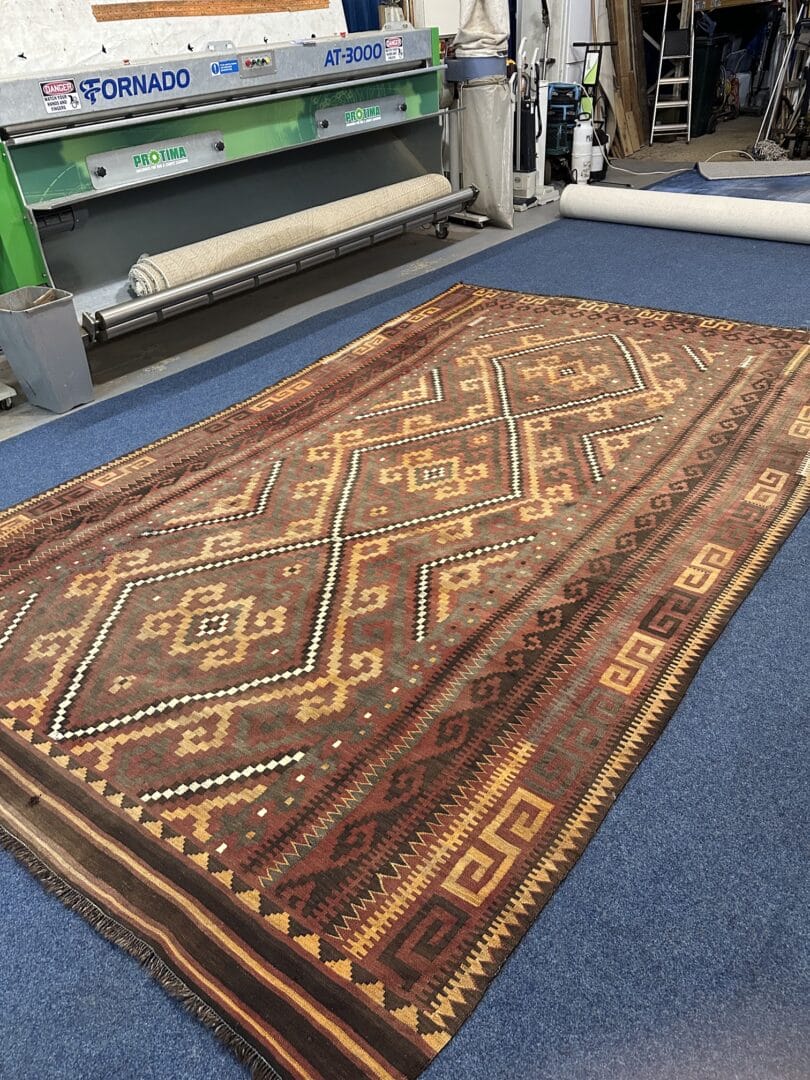
Rugs are not the same as fitted carpets.
This is an important point.
A rug may look like a small carpet, but it can behave very differently during cleaning.
Rugs can have different fibres, dyes, backing materials, fringes and construction methods. Some hold dry soil deep inside the foundation. Some dyes are more likely to move. Some fibres can distort, shrink, brown or lose texture if treated too aggressively.
That is why a professional rug assessment should look at more than the stain itself.
Before choosing a method, the right checks include the fibre type, dye stability, construction, backing, fringe condition, old repairs, previous cleaning attempts and whether the rug is suitable for the proposed treatment.
How different rug fibres react to oil
Oil and grease do not affect every rug in the same way.
Wool rugs can hold oily contamination within the fibre structure, which may make the stain harder to release fully.
Silk and viscose rugs need particular care because strong products, rubbing or overwetting can affect appearance and texture.
Synthetic rugs may resist some staining better, but oil can still sit in the pile or travel into the backing materials.
Natural fibre rugs, like jute or sisal, can be especially awkward because moisture and oil may both affect the look and structure of the rug.
This is why a stain that looks simple in a photo may still need proper inspection before anyone can say what is realistic.
Can oil and grease stains be removed completely?
Sometimes, yes.
But not always.
The honest answer depends on what caused the stain, how long it has been there, how deeply it has reached, what the rug is made from, and what has already been used on it.
Some stains improve very well with the right treatment. Some leave a slight shadow. Some oily marks change the way the fibres reflect light, which means the area may remain visible even after contamination has been reduced.
That is not a failure of effort. It is the reality of stain treatment.
A good rug cleaner should not promise full removal until the rug is properly inspected. Inspection helps explain what is realistic, what the risks are, and whether treatment is sensible.
Why does the stain feel bigger than the mark itself?
Oil and grease stains often happen in the rooms people use most.
Dining rooms.
Lounges.
Family rooms.
Open-plan kitchen areas.
That means the mark is not tucked away somewhere you rarely see. It is often right in the place where people sit, eat, walk through or welcome guests.
After a while, it stops feeling like a small stain and starts becoming the thing your eye goes to every time you enter the room.
People often try moving furniture, turning the rug, cleaning it again or hoping the mark will fade. That frustration is very normal. The aim is not always perfection. Often, people simply want the rug to stop making the room feel untidy.
That is why honest advice matters. It helps you decide whether the rug is likely to clean well, whether improvement is more realistic, or whether repeated attempts may do more harm than good.
What professional rug inspection looks for
Professional oil stain treatment is not just about using a stronger product.
It starts with judgment by the technician!
A proper assessment should consider:
- What the stain is likely to be
- when it happened
- What has already been used
- whether the rug is wool, silk, viscose, synthetic or another fibre
- whether dyes are stable
- whether the backing, fringe or repairs are vulnerable
- whether the mark is oil, residue, soil, wear or chemical change
- Whether the rug is suitable for controlled off-site cleaning
For many rugs, off-site cleaning gives more control than trying to treat the stain in the home. It allows for inspection, dusting, washing, rinsing, extraction and controlled drying where suitable. Art of Clean has a long history of collecting off-site rug cleaning in the Cambridge area, which can give clients a more controlled option than cleaning suitable rugs in the home.
Specialist Treatment Service
What to do if you have just spilt oil or grease on a rug
Do not panic, and do not start adding lots of products.
Blot gently with a clean absorbent towel if the spill is fresh and safe to touch. Work carefully rather than rubbing. Avoid heat, avoid soaking the rug, and avoid using several cleaners one after another.
If the rug is wool, silk, viscose, antique, inherited, sentimental or has delicate fringe, it is better to ask before treating it. A quick photo can help the team understand what you are dealing with.
The most useful information to share is what was spilt, when it happened, what the rug may be made from, and anything already used on the mark.
That gives the technician a much better starting point.
What if you have other rug stains too?
Oil and grease stains are only one type of rug problem.
Pet accidents, red wine, tea, coffee, mud, dye transfer and general soiling can all behave differently. The same cleaning method will not suit every stain or every rug.
That is why we created the main guide: Why Every Rug Stain Needs a Different Treatment.
It explains why fibre type, dye stability, moisture, age, previous products and stain type all affect the safest treatment route.
What to Do Before Trying Anything Else
Oil and grease stains are difficult because they do not always stay still.
They can cling to fibres, attract more dirt, spread during cleaning attempts and leave a dark patch that keeps drawing the eye.
The best next step is not to keep trying stronger products at home. It is to get honest advice before the rug is made harder to treat.
Sometimes the result can be excellent. Sometimes the realistic aim is improvement. Either way, a proper assessment gives you a clearer answer before more damage is done.
If you are unsure what is possible, send us a photo or contact the team. We can talk through what has happened and explain what looks realistic.
FAQs
Why does my oil stain keep getting darker?
Oil can leave behind sticky residue inside the rug fibres. That residue attracts dust and soil, so the patch may darken over time even after it looked better at first.
Can grease permanently stain a rug?
Yes, some grease and oil marks can leave permanent darkening or shadowing. This is more likely if the stain is old, has travelled deep into the rug, or has already been treated with unsuitable products.
Should I use washing-up liquid on a rug’s grease stain?
It is risky. Washing-up liquid may help with grease on hard surfaces, but on rugs it can leave residue if not rinsed properly. That residue may attract more dirt afterwards.
Are wool rugs harder to clean after oil spills?
Wool can hold oily contamination within the fibres, so grease stains may be harder to remove fully. The result depends on the oil, the age of the stain, the rug construction and any previous cleaning attempts.
Is it better to clean an oil-stained rug at home or off-site?
It depends on the rug. Some rugs need controlled offsite cleaning because inspection, dusting, rinsing and drying can be managed more safely than in the home.