A pale patch on your rug can be worrying, especially if the rug is valuable, sentimental, or sits in a room you use every day.
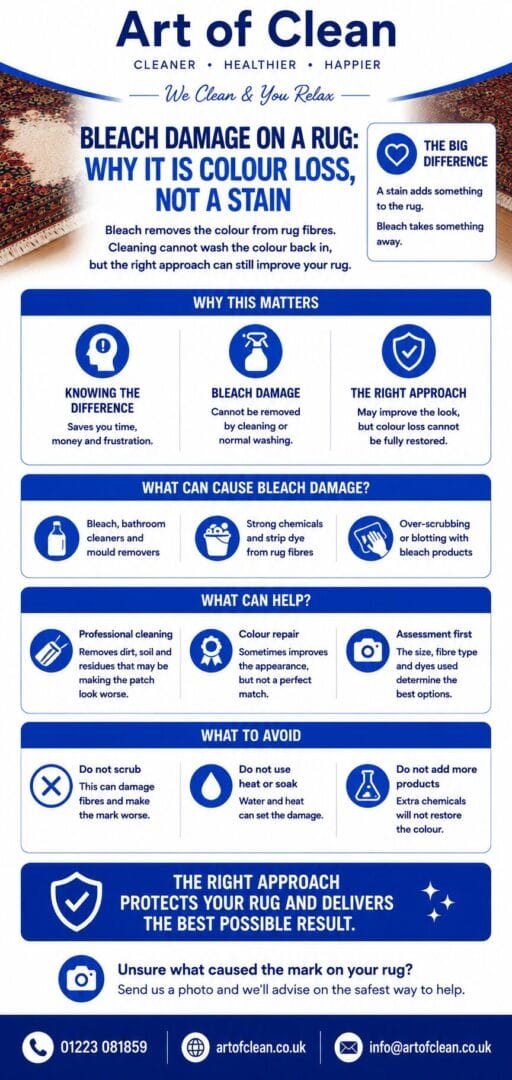
The first useful thing to know is this: bleach damage is usually not a normal stain. A stain adds something to the rug. Bleach takes something away.
When bleach or a strong cleaning chemical strips dye from rug fibres, the mark left behind is colour loss. That matters because cleaning cannot simply wash the original colour back in.
Why this matters to you
Knowing the difference really does save you time, money and frustration.
If the mark is soil, residue or a normal spill, cleaning may help. If the mark is dye loss, cleaning may still improve the rest of the rug, but it will not restore the missing colour by itself.
That does not always mean the rug is ruined. It does mean the next step should be assessment, not more cleaning products.
What can bleach and chemicals do to a rug?
Bleach, bathroom cleaner, mould remover, some stain removers and other strong household products can all affect rug dyes.
Depending on the rug, the damaged area may look white, yellow, orange, pink, faded or dull. Sometimes the patch appears quickly. Sometimes it becomes clearer as the area dries.
The result depends on the fibre, the dye, the strength of the chemical, how long it was there and what has already been tried.
A wool rug, silk rug, viscose rug, Persian rug or inherited rug needs particular care because fibre type, dye stability, backing and construction all affect what is safe to do next.
Can rug cleaning remove bleach damage?
Usually, no.
Professional rug cleaning can remove dust, soil, residues and some types of staining. It cannot replace dye that has already been stripped from the fibre.
This is the part that needs honest expectation-setting. A rug may come back cleaner, fresher and brighter overall, but the pale bleach mark may still be visible because the colour itself has changed.
That is not poor cleaning. It is the difference between removing something from the rug and replacing the colour that has been chemically removed.
Can colour repair help?
Sometimes colour repair may help, but it depends on the rug.
A small bleach spot on a suitable rug may be more realistic to improve than a large, uneven patch across a detailed pattern. Plain colours, mixed colours, fringe areas, worn fibres and delicate dyes all change the level of difficulty.
Colour repair is skilled work. The aim is usually improvement, not a promise that the mark will become completely invisible.
Before advising on rug colour repair, a professional should check the fibre, dye stability, construction, condition of the damaged area and whether any chemical residue remains.
What should you do straight away?
If the bleach or chemical spill has just happened, do not scrub the rug. Scrubbing can spread the chemical, disturb the fibres and make the area harder to assess.
Blot gently with a clean absorbent towel if the area is still wet. Do not use heat. Do not soak the rug. Do not add another stain remover to try to cancel out the first one.
Take a photo of the mark. If you know what product caused it, keep the bottle or write down the name. That information can help when you ask for advice.
If the rug is wool, silk, viscose, antique, inherited, Persian, Oriental or sentimental, pause before doing anything else.
Why can more products make things worse?
Most people try to help before they call someone. That is understandable.
The problem is that rugs are not all made in the same way. A product that seems harmless on one surface may affect the dye, backing, fringe or fibre on another.
Using several products one after another can also make it harder to tell what caused the mark. By the time the rug is assessed, the issue may be a mix of original spill, bleach damage, product residue, over-wetting and fibre change.
With bleach damage, doing less is often the safer choice until the rug has been checked.
What should a rug cleaner check before giving advice?
A proper assessment should look at more than the pale patch.
The rug’s fibre, dye stability, backing, fringe, construction, age, previous cleaning attempts and general condition all matter. So does the size and position of the damaged area.
For some rugs, the safest advice may be cleaning only, with the colour loss left as it is. For others, colour repair may be worth discussing. In some cases, treatment may not be sensible if the rug is fragile, badly worn or not worth the cost of repair.
The right answer depends on the rug in front of us.
When cleaning may still be worth doing
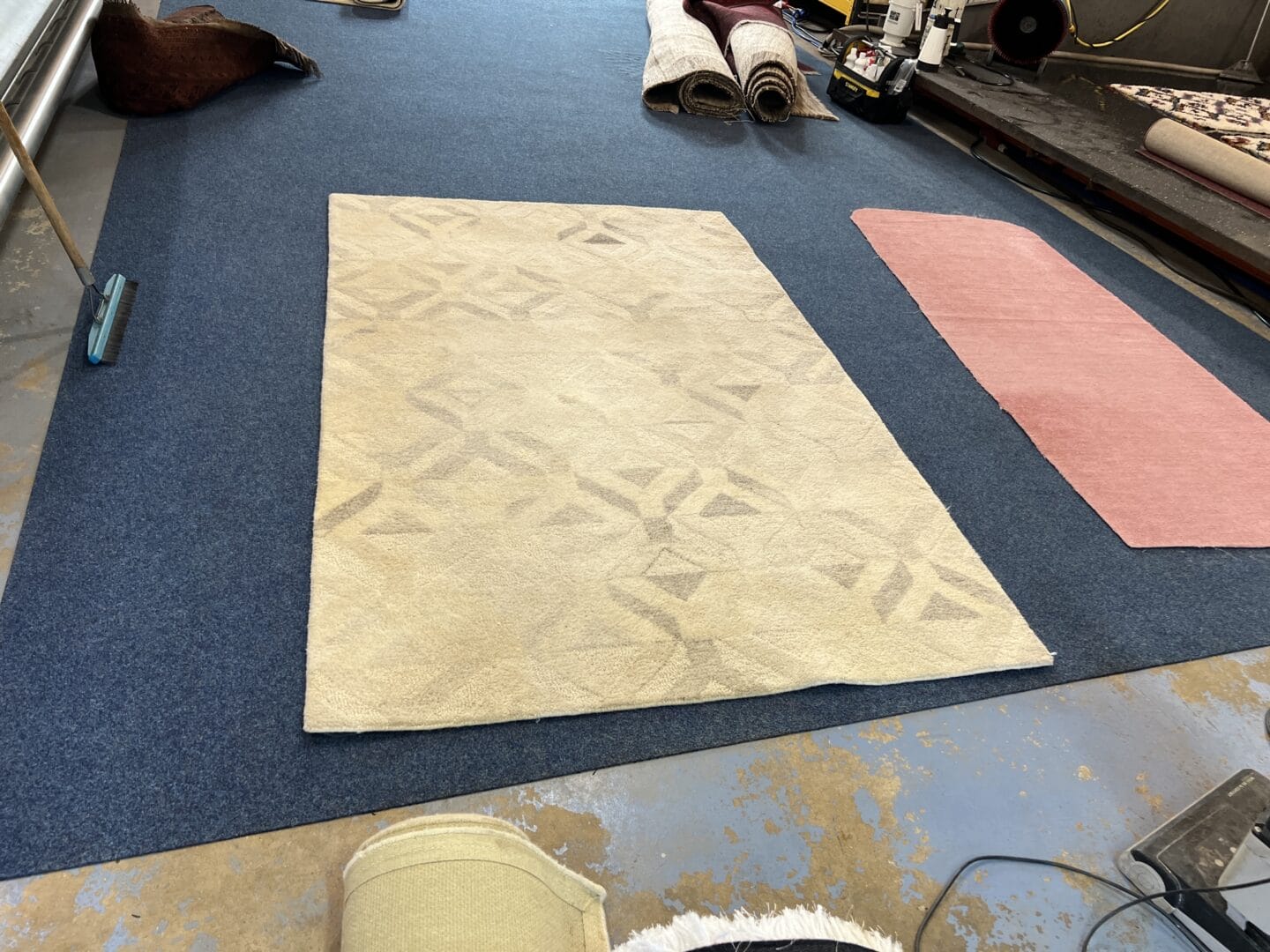
A bleach mark may not be removable through cleaning, but the rest of the rug may still benefit from a proper cleaning.
Many rugs hold dry soil deep in the foundation. Others look dull because of everyday use, pet contact, food spills or general household dust. A controlled off-site clean may improve the rug overall, even if the bleach mark remains.
The important part is that you know this before the work begins. Cleaning should not be sold as a cure for missing dye.
When repair may not be the best route
Sometimes the most honest answer is not to repair the rug.
If the damaged area is large, the rug is of low value, the fibres are badly weakened, or the mark sits in a difficult patterned area, repair may not give enough benefit for the cost.
In those cases, it may be better to reposition the rug, place furniture carefully, live with the mark, or consider replacing the rug when the time is right.
That may sound disappointing, but it is better than paying for a service with the wrong expectation.
A simple way to think about it
Ask this first:
Has something been added to the rug, or has colour been taken away?
If something has been added, cleaning may be able to remove or improve it.
If colour has been taken away, cleaning alone cannot put it back.
That one difference helps you decide whether you need rug cleaning, colour repair advice, or an honest conversation about whether treatment is worthwhile.
Need help with a bleach mark on a rug?
Send us a clear photo of the damaged area and, if possible, a photo of the whole rug. Let us know what product was used and whether anything else has already been tried.
We can talk through what looks realistic before you decide what to do next.
FAQs
Can bleach damage be removed from a rug?
Bleach damage is usually colour loss, not a removable stain. Cleaning may remove residue or improve the rest of the rug, but it cannot simply restore dye that has been stripped from the fibres.
Is a bleach mark the same as a stain?
Not really. A normal stain usually adds colour or residue to the rug. Bleach removes or changes the rug’s dye, which is why the mark often looks pale, yellow, orange or faded.
Can a rug be re-dyed after bleach damage?
Sometimes colour repair or dye work may improve the area, but it depends on the rug, fibre, dye stability, size of the mark and position of the damage. It should be assessed before any result is promised.
Should I try a stain remover on a bleach mark?
No. A bleach mark is not a normal stain. Adding more products can make the area harder to assess and may cause further chemical damage.
Is it still worth cleaning a rug with bleach damage?
It can be, if the rest of the rug is dusty, dull or soiled. The bleach mark may remain, but the rug may still benefit from cleaning if expectations are clear before work starts.