Sheepskin rugs are lovely things. They are soft, warm, comforting underfoot and often bought because they make a room feel more inviting. The difficulty is that they are not built like a normal rug.
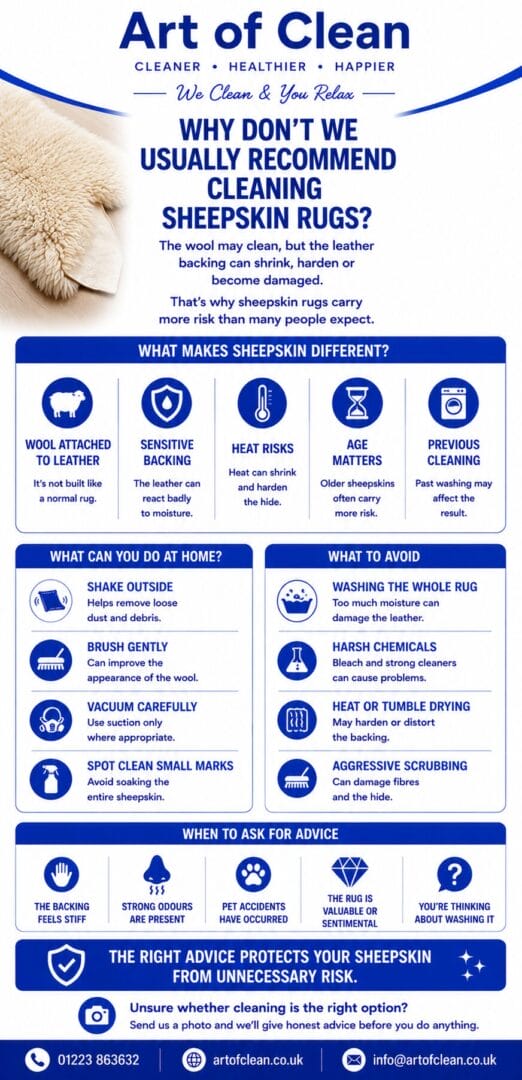
A woven wool rug, Persian rug or synthetic rug has a structure we can inspect, dust, test, clean, rinse and dry in a controlled way. A sheepskin rug is different. It is wool attached to skin. That skin has been tanned, and once it becomes stiff, shrunken, cracked or distorted, there is often very little a cleaner can do to bring it back properly.
That is why, in many cases, we do not recommend putting a sheepskin rug through a normal professional rug cleaning process.
The short answer is this: sheepskin rugs carry a higher cleaning risk than many people expect. The wool may clean, but the leather side may not respond well to water, movement, drying or previous wear. A cleaner has to think about the whole item, not just the fluffy surface.
Why sheepskin is not the same as a normal rug
A normal rug is made to be a floor covering. It may be wool, silk, viscose, cotton, jute, synthetic fibre or a mix of materials. It may still need careful testing, especially for dye stability, fringe condition and construction, but it is still a rug in the usual sense.
A sheepskin is a natural fleece with the hide still attached. That changes the cleaning decision completely.
The wool and the leather do not always want the same thing. The wool may need cleaning to remove soil, odour or stickiness. The leather side, however, may dislike too much moisture, too much agitation, the wrong detergent, slow drying or heat. If the leather dries badly, it can become hard, misshapen or brittle.
This is where good rug cleaning judgment matters. It is not enough to ask, “Can we make it cleaner?” We have to ask, “Can we clean it without making the item worse?”
The main risk is the leather backing
When clients bring in a sheepskin, they are usually looking at the wool. They notice it has gone flat, yellowed, dull, matted or grubby. That is understandable, because the wool is the part you see and touch.
The bigger concern is often underneath. The leather backing can shrink, harden or lose its soft feel after washing. Even careful drying may not return it to the way it felt before. If the sheepskin is already older, dry, previously washed, sun-damaged or heavily used, the risk is higher.
Specialist sheepskin care advice also warns against saturating sheepskin and recommends drying it naturally away from direct or artificial heat, because heat can shrink and harden the leather. Skyeskyns’ sheepskin care guide explains this well.
That is why we are cautious. We would rather tell a client the risk before cleaning than apologise afterwards for a rug that has become stiff or distorted.
Why a professional clean may not improve it enough
Some sheepskins come to us because they are dirty. Others come in because they look tired, flat or worn. Those are not always the same problem.
Cleaning removes soil, but it cannot reverse wear. If the wool fibres have become matted from foot traffic, body oils, pets, furniture pressure or years of use, cleaning may only improve part of the problem. Brushing can help in some situations, but it cannot always recreate the soft, springy look the rug had when it was new.
This is especially true with sheepskins used beside beds, in children’s rooms, on chairs or in pet areas. They often collect oils, dust and repeated pressure in the same places. By the time they look visibly tired, the problem may be a mix of soil, wear, matting and changes in the leather.
A normal rug can often be improved through dusting, washing, rinsing and controlled drying. With sheepskin, the cleaning may help the wool but still leave the item looking older than the client hoped. That is not a failure of cleaning. It is the nature of the material.
Why are we careful with water, heat and agitation?
Our rug cleaning process is designed around proper inspection, dye testing, dust removal, controlled washing, rinsing, extraction and drying. That process works well for many rugs because it gives us control.
Sheepskin does not always suit that kind of process. Too much water can affect the leather. Too much movement can disturb the wool. Drying too quickly can harden or shrink the backing. Drying too slowly can create its own problems.
Even manufacturers and sheepskin specialists tend to recommend gentle care, regular brushing, careful spot cleaning and avoiding harsh chemicals. The Wool Company’s sheepskin cleaning guide gives useful general maintenance advice for owners who want to keep a sheepskin looking better for longer.
The important point is that home care advice is not the same as saying every sheepskin is a good candidate for professional deep cleaning. Some are. Many are not. The care label, age, tanning, condition, colour, previous cleaning and client expectation all matter.
The care label may not tell the whole story
A care label can be helpful, but it is not a guarantee. Labels can fade, be removed, be unclear or apply only when the sheepskin is newer and in better condition.
A sheepskin that was washable when new may not behave the same way years later. The leather may have dried out. The wool may have matted. Previous cleaning products may have been used. Pet accidents, spills, sunlight or storage may have changed the way it responds.
This is one reason we do not like making promises from a photo alone. A photo can show colour and surface condition, but it cannot tell us enough about the leather backing, fibre feel, old product use or hidden brittleness.
What we usually recommend instead
For many sheepskins, the best care is regular light maintenance rather than a deep clean.
Shake it outside, brush it gently and keep it away from heavy soil where possible. A suitable brush can help lift the wool and reduce matting. A gentle vacuum using suction only may help remove loose dust, but avoid aggressive beater bars or rough brushing that pulls at the fibres.
For small marks, gentle spot cleaning may be safer than soaking the whole item. Avoid harsh stain removers, bleach, strong detergents, scrubbing and heat. If you are unsure what has been used on it before, pause before adding anything else.
If the sheepskin has a strong odour, heavy pet contamination, yellowing, sticky residue or a stiff backing, it is worth asking for advice before trying to wash it at home. Sometimes the kindest answer is that replacement may be more sensible than cleaning.
When we may still look at a sheepskin
We are not saying every sheepskin must be refused without looking. We are saying that we approach them carefully.
If a sheepskin is fairly new, lightly soiled and clearly labelled as washable, there may be more room to discuss options. Even then, the client needs to understand that the leather backing may change and that results cannot be promised in the same way as they might be with a more suitable rug.
If the sheepskin is sentimental, expensive, old, heavily soiled or already stiff, we would be even more cautious. The more important the item is to you, the more important it is that we talk honestly before doing anything to it.
This is the part of rug cleaning we care about deeply. The right answer is not always “yes, we can clean it”. Sometimes the right answer is, “We could try, but we do not think the risk is fair to you.”
What to send us before bringing it in
If you would like us to take a look, send us a few clear photos first.
A good photo helps us give better first advice. Please include the wool side, the leather backing, any care label, the worst marks and any areas that feel stiff, flat or damaged. Tell us what happened, how long it has been like that and whether anything has already been used on it.
That gives us a better starting point. It also helps us avoid wasting your time if the sheepskin is unlikely to be a good cleaning candidate.
You can talk to us on our contact page or look through more advice in our Knowledge Centre.
The honest answer
We love cleaning rugs, but we love good judgement more. A careful rug cleaner should know when to clean, when to test, when to ask more questions and when to advise against a job.
With sheepskin rugs, the risk is often in the leather, not just the wool. If cleaning is likely to make the backing hard, distorted or less pleasant to use, we would rather say so before you spend money on a result that may disappoint you.
If you have a sheepskin rug and are unsure what to do, send us a photo. We will give you a straight answer, even if that answer is that cleaning is not the best route.