A rug can look tired long before it looks truly dirty.
In many Newmarket homes, rugs sit in the busiest parts of the house. They may be by the front door, under the dining table, in the sitting room, beside a fireplace, or in a hallway where pets, shoes and family life pass over them every day.
At first, the rug may only look a little flat. The colours may not seem as clear as they once were. It may feel dusty when you move it, or you may notice a dull patch where people walk most often.
That visible change is not always just surface dirt. Rugs can hold dry soil deep in the pile and foundation, especially wool rugs, thick rugs and rugs that have been used for years without a proper clean.
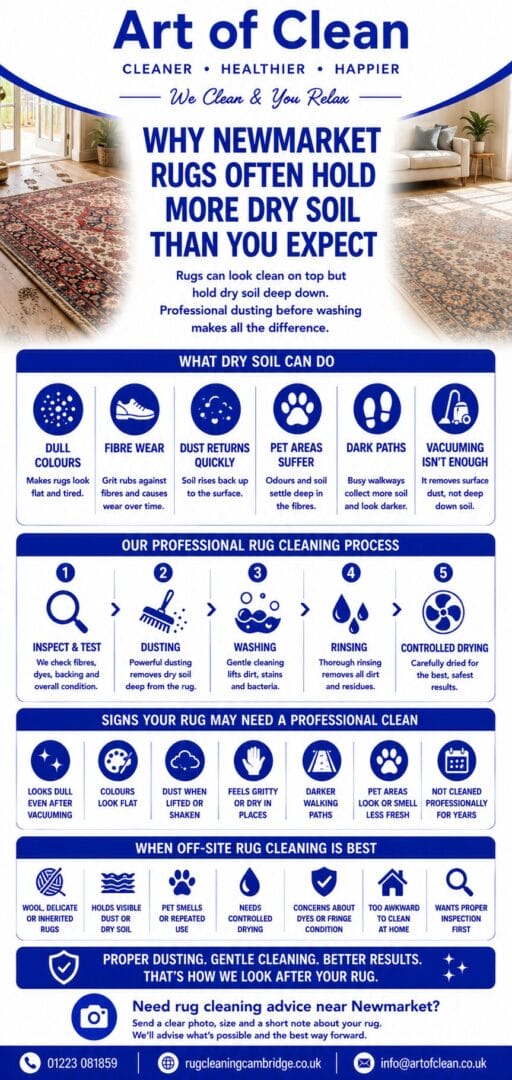
The dirt you see is only part of the story
Most people notice a rug problem when the surface changes. The colours look muted. The edges look dusty. The area near the sofa or doorway starts to look darker than the rest.
But dry soil often works its way below the surface.
Tiny particles of grit, dust and outdoor soil can settle deep into the rug. This can happen gradually, especially in rooms that connect to gardens, driveways, utility areas or busy entrances. Newmarket homes with pets, country walks, older floors or regular foot traffic can see this more quickly, but it is common in many everyday homes.
The rug may not look dirty in an obvious way. It may simply stop looking bright.
Why dry soil matters
Dry soil is not just a cosmetic problem.
When grit and fine soil sit inside a rug, they can rub against the fibres as people walk over it. Over time, that can contribute to wear, dullness and a flatter appearance. This is one reason a rug can look tired even when it is vacuumed regularly.
Vacuuming is still useful. It helps remove loose dust and surface debris, and it is one of the best ways to look after a rug between professional cleans. But domestic vacuuming may not remove heavier dry soil that has settled deeper into the foundation.
That is why a proper rug cleaning process should not begin with washing alone.
Why does dusting comes before washing
It can be tempting to think that cleaning a rug simply means adding water and detergent. In reality, dry soil needs attention first.
If a rug contains a lot of dry soil, washing it too quickly can turn that soil into mud inside the rug. That makes the cleaning process harder and can affect how well the rug rinses and dries.
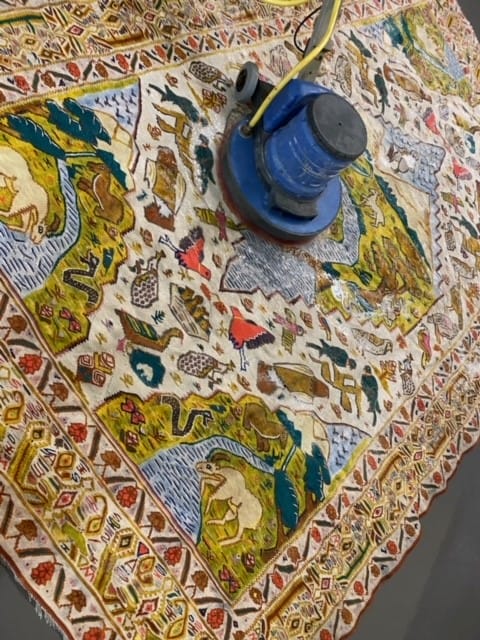
Professional rug cleaning should include inspection, testing and dry soil removal before the main wash, where suitable. This is one of the reasons collected off-site rug cleaning can be helpful. It gives more control over dusting, washing, rinsing, extraction and drying than a quick clean in the home.
At Rug Cleaning Cambridge, the rug cleaning process includes steps such as dye testing, dusting, washing, rinsing and controlled drying. The service also offers collection and delivery within 25 miles of Cambridge, with the cleaning plant based at Chittering on the A10.
Rugs are not just small carpets.
A rug may sit on the floor like a carpet, but it can behave very differently during cleaning.
Before choosing a cleaning method, a rug cleaner should consider the fibre, dyes, backing, fringe, construction, old repairs, previous cleaning attempts and general condition of the rug. Some rugs are robust. Others need more caution.
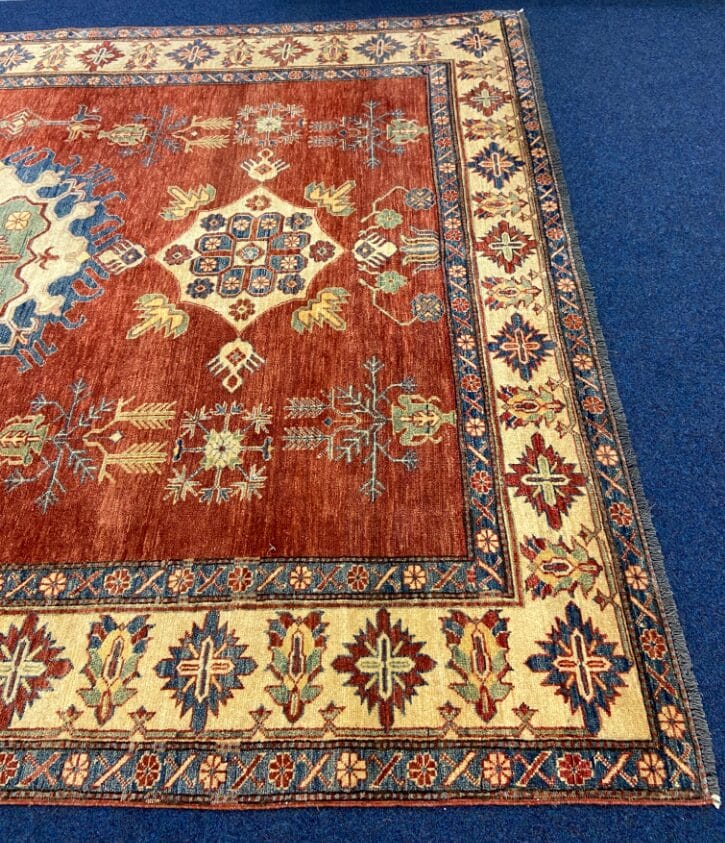
This matters because not every rug should be treated in the same way. A wool rug, viscose rug, silk rug, Persian rug, inherited rug or sentimental rug may need a different approach from a modern synthetic rug.
Some dyes can move when wet. Some fringes are fragile. Some backings do not respond well to excess moisture. Some rugs have old repairs or wear that should be checked before cleaning begins.
A good clean is not only about removing dirt. It is about choosing a method that suits the rug in front of you.
Why Newmarket homes may notice this problem
Newmarket has plenty of homes where rugs work hard without anyone really thinking about it. A rug near a garden door may collect soil from outside. A sitting room rug may carry pet hair, fine dust and crumbs. A dining room rug may pick up food particles and chair movement. A hallway rug may take the first impact from shoes, pushchairs, dogs and everyday traffic.
Older homes can also add their own pattern of dust and fine particles. Fireplaces, older floorboards, busy entrances and open doors during warmer months can all contribute to the amount of dry soil a rug holds.
This does not mean every rug in Newmarket has the same issue. It simply means local homes often give rugs a practical job. They are not just decorative. They absorb a lot of daily life.
Signs your rug may be holding dry soil
You may notice:
- The rug looks dull, even after vacuuming.
- Colours seem flatter than they used to
- Dust appears when you lift, shake or move the rug.
- The rug feels gritty or dry in busy areas.
- There are darker paths where people walk.
- Pet areas look or smell less fresh.
- The rug has not been professionally cleaned for several years.
These signs do not always mean the rug is badly soiled, and they do not guarantee that every mark will disappear. They are simply reasons to ask for advice.
What if there are stains too?
Dry soil is only one part of rug cleaning.
A rug may also have food spills, drink marks, pet accidents, oily residue, dye transfer or old product residue from previous cleaning attempts. These issues need to be assessed separately.
It is important not to assume every dark area is removable dirt. Sometimes it is soil. Sometimes it is worn. Sometimes it is residue. Sometimes a previous product has affected the fibre or dye.
If you have used a stain remover, washing-up liquid, pet product or other cleaner on the rug, tell the team before cleaning. That information helps the technician understand what may be happening and what is realistic.
If a spill has just happened, avoid scrubbing, avoid heat, avoid soaking the rug and avoid adding several products one after another. Blot carefully where appropriate and ask for advice, especially if the rug is wool, silk, viscose, antique, inherited or sentimental.
What result should you expect?
Some rugs brighten noticeably after proper dusting and cleaning. Colours can look clearer, the pile can feel fresher, and the rug may sit better in the room again.
But it is important to keep expectations realistic.
Cleaning can remove soil, dust and some types of contamination. It cannot reverse all wear, repair every stain, restore missing dye or make every rug look new. The result depends on the fibre, construction, dye stability, condition, previous treatment and how deeply soil or staining has settled.
This is why inspection matters. It helps you understand whether cleaning is likely to give a good improvement, whether there are risks to consider, or whether another service, such as repair or specialist treatment, may be worth discussing.
When off-site rug cleaning may be the better choice
Off-site rug cleaning may be suitable when:
- The rug is wool, thick, delicate, inherited or sentimental.
- The rug holds visible dust or dry soil.
- There are pet smells or repeated use in one area.
- The rug needs controlled drying.
- There are concerns about dye stability or fringe condition.
- The rug is too awkward to clean safely in the home.
- You want the rug inspected properly before cleaning.
Cleaning a rug away from the home gives the team more control. It allows the rug to be checked, dusted, washed, rinsed, extracted and dried in a more suitable environment where the rug type and condition allow.

Need rug cleaning advice near Newmarket?
If your rug looks dull, dusty or tired, it may be holding more dry soil than you expect.
You do not need to guess what it needs. Send a clear photo of the rug, a rough size, and a short note about what concerns you. If there are stains, pet issues or previous cleaning attempts, mention those too.
The team can advise what looks realistic and whether collection for off-site rug cleaning may be suitable.