When a rug is collected for cleaning, it can feel a little unknown. You hand it over at the door, then wait for it to come back cleaner, fresher and easier to live with.
What many people do not see is the care that happens in between.
Rug cleaning is not the same as cleaning a fitted carpet. A rug can have its own fibre, dyes, backing, fringe, construction, previous damage and history. Some rugs are modern and practical. Some are wool, Persian, inherited, sentimental or delicate. Some have years of dry soil hidden deep in the foundation. Some have pet odour, old stains, colour movement or fringe damage that needs careful checking before any cleaning method is chosen.
That is why collection and offsite cleaning can be so useful. It gives the team time and space to inspect the rug properly, choose a suitable method and dry it in a more controlled way than would usually be possible in the middle of a home.
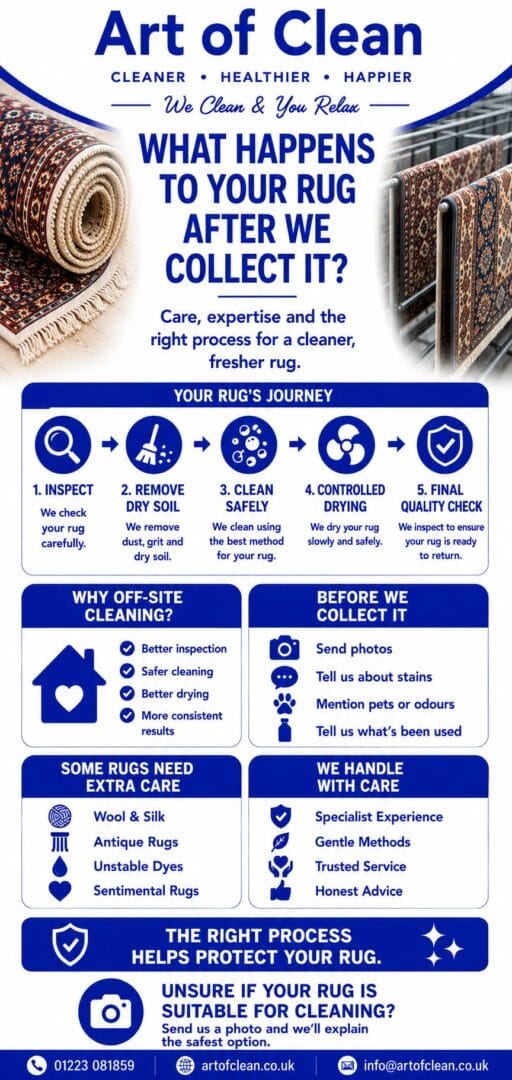
First, we inspect the rug.
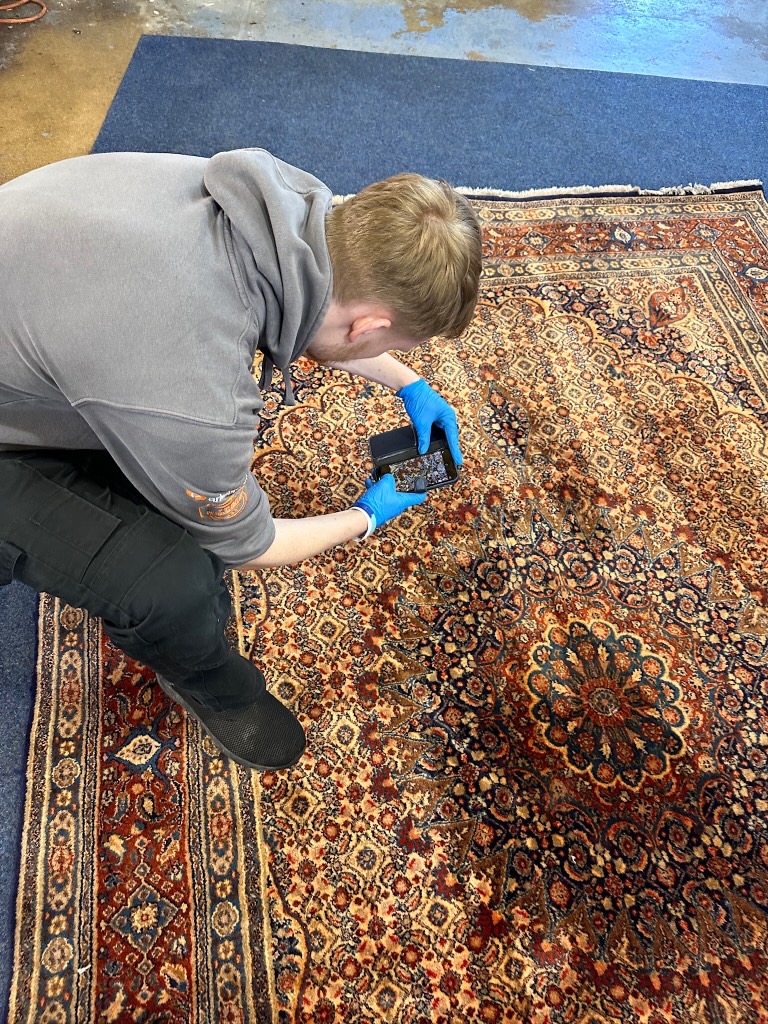
Before cleaning starts, the rug needs to be looked at carefully.
The team checks the fibre, construction, backing, fringe and general condition. We also look for old repairs, weak areas, dye concerns, pet contamination, previous cleaning attempts and any signs that the rug may need extra care.
This stage matters because two rugs can look similar but behave very differently once cleaning begins. A small modern wool rug, a hand-knotted rug, a flatweave, an old inherited rug and a rug affected by pets may all need different handling.
The method should follow the rug, not the other way round.
We check for risks before choosing a method.
A good rug clean is not just about making the rug wet and extracting the water again.
Some dyes can move. Some fringes are already weak. Some backings do not respond well to too much moisture. Some old stains have already changed the fibre or colour. Some pet odours may improve but not fully disappear, especially if contamination has reached deep into the structure.
This does not mean the rug cannot be cleaned. It means the risks need to be understood before the work begins.
If a rug carries a higher risk, or if a mark may only improve rather than disappear, that should be explained clearly. Honest advice is better than promising a result that the rug may not be able to give.
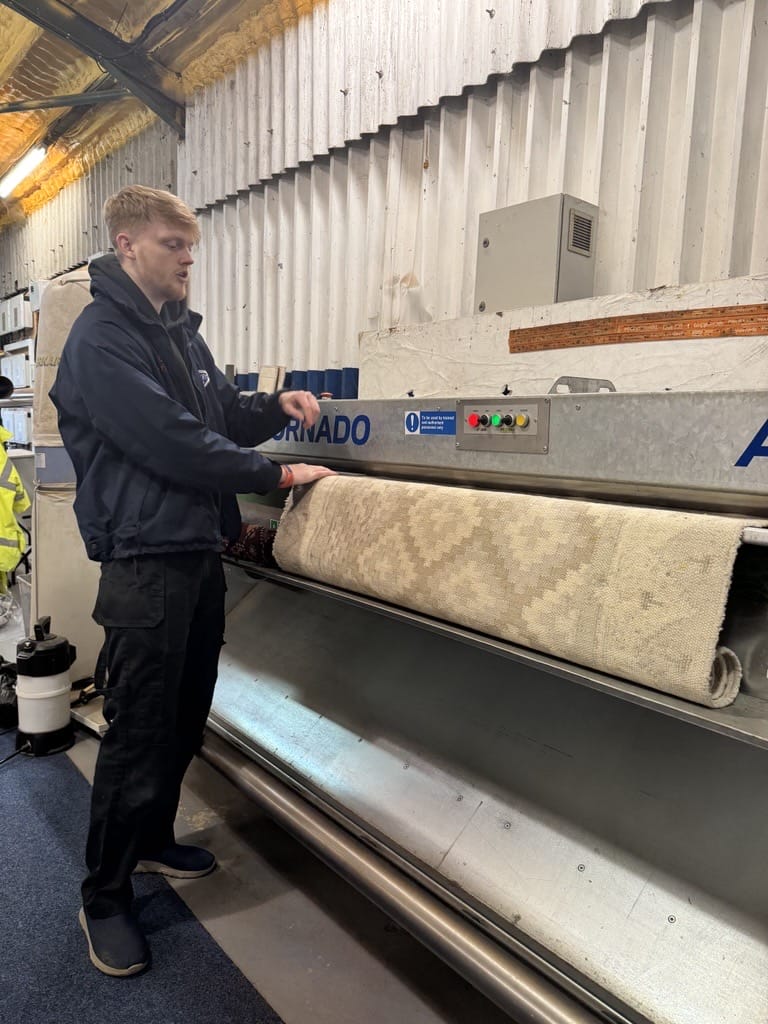
Dry soil is removed before washing where suitable.
Many rugs hold more dry soil than people realise.
Dust, grit, hair and fine soil can settle deep into the rug, especially in busy homes, under dining tables, in hallways or where pets like to rest. This dry soil can make a rug look dull and can sit below the surface, even when the top of the pile does not look too bad.
Removing dry soil is an important part of the process because it helps the later cleaning stages work more effectively. It is one of the reasons offsite rug cleaning can be more thorough than a quick surface clean in the home.
The cleaning method is chosen for the rug.
Once the rug has been inspected and prepared, the team chooses the most suitable cleaning approach.
Some rugs may be suitable for a deeper wash, rinse and extraction process. Others may need a more cautious method because of fibre, dye, backing or age. Delicate rugs, viscose rugs, rugs with unstable dyes, older repairs or fragile fringe may need extra care.
This is where experience matters. Brad often starts by considering what result is realistic for the rug in front of him, because some fibres, stains and dyes have honest limits. The aim is not to force every rug through the same process. The aim is to clean the rug as safely and effectively as its condition allows.
Controlled drying is part of the cleaning.
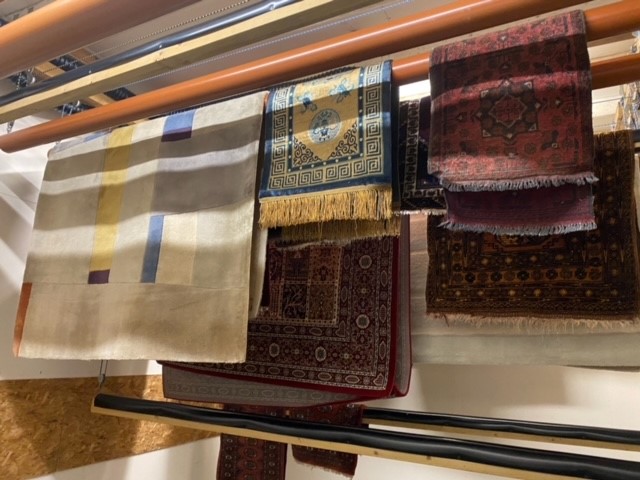
Drying is not an afterthought.
A rug that is cleaned but not dried properly can be left with problems. Depending on the rug, poor drying can affect odour, backing, fibre feel or general condition. In a dedicated rug cleaning space, the team has more control over how the rug is handled and dried after cleaning.
This is especially useful for larger rugs, rugs that hold moisture, rugs with pet issues, and rugs that would be difficult to dry safely in a normal room at home.
We carry out final checks before return.
Once the rug has been cleaned and dried, it is checked again before it is returned.
The team looks at the overall result, checks whether there are any remaining marks or areas of concern, and makes sure the rug is ready to go back into the home.
Some rugs look brighter because dust and soil have been removed. Colours may appear clearer. The pile may feel fresher underfoot. A rug that looked tired may feel more like part of the room again.
But it is not always realistic to promise a like-new result. Wear, sun fading, dye loss, old stains, pet contamination, fringe damage and previous product use can all affect what is possible.
Why does collection and return help?
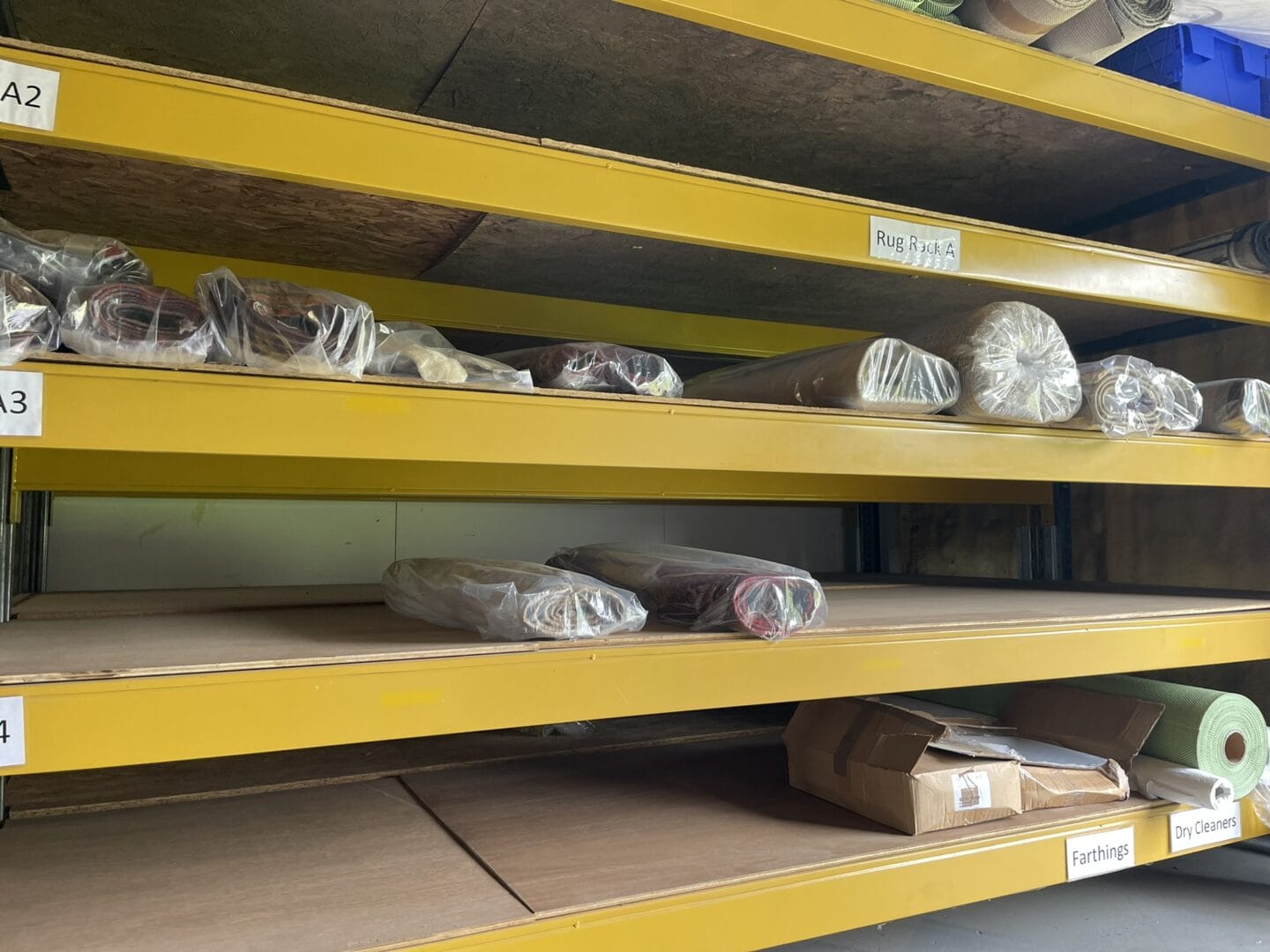
For many clients, collection and return are among the most useful parts of professional rug cleaning.
It saves the effort of trying to move, clean and dry a rug at home. It also means the rug can be assessed and cleaned in a space designed for the work, rather than being treated on the floor in a busy room.
This can be helpful if the rug is large, awkward to move, heavily soiled, delicate, sentimental or affected by odour. It also gives the team more control over dust removal, testing, cleaning, rinsing, extraction and drying where suitable.
Clients often tell us they value the convenience, but also the communication. Knowing what is happening, what is realistic and when the rug will be returned makes the process easier to trust.
What you can do before collection
A little information can help the team advise you properly.
Before your rug is collected, tell us if you know:
- What the rug is made from
- whether there are stains or odours
- What caused the stain, if known
- When the problem happened
- whether any products have already been used
- whether the rug is inherited, sentimental, Persian, wool, silk, viscose or delicate
- whether there is fringe damage, old repairs or loose areas
Photos can also help. A photo of the whole rug and a close-up of any problem area can make early advice easier.
If something has just been spilt, pause before adding products. Blot gently with a clean absorbent towel if it is safe to do so. Avoid scrubbing, soaking, heat or using several products one after another. If you are unsure what the rug is made from, it is usually safer to ask before treating it at home.
Will every rug be suitable for normal cleaning?
Not always.
Some rugs need extra testing or a more cautious approach. A rug may not be suitable for normal cleaning if it has unstable dyes, weak fringe, old repairs, structural damage, severe dye loss, previous shrinkage, heavy pet contamination or unknown chemical treatment.
In some cases, cleaning may still be possible with realistic limits. In others, the safest advice may be to avoid a normal clean or consider a different route.
That can be disappointing, especially if the rug has sentimental value, but it is better to be clear before work begins than to put the rug at unnecessary risk.
The aim is a better rug and a clearer expectation.
Good rug cleaning should leave you with more than a cleaner rug. It should also leave you with a clearer understanding of what has been done, what has improved and what limits may remain.
For many rugs, professional cleaning can make a real difference. It can remove dry soil, freshen the pile, improve appearance and make the rug more pleasant to have in the home again.
For other rugs, the result may be more about careful improvement than dramatic transformation.
Either way, the most important part is choosing the right process for the rug itself.
Thinking about having a rug cleaned?
If you are not sure whether your rug should be cleaned, start with a photo and a short description.
Tell us what you know about the rug, what has happened to it and whether anything has already been used. We can then explain whether collection and assessment would be sensible, what may need checking and what result is realistic.
A proper rug clean starts before the rug is washed. It starts with understanding what the rug needs.