A red wine or coffee spill on a rug can feel like one of those heart-sink moments, especially if the rug is light, wool, inherited or expensive to replace.
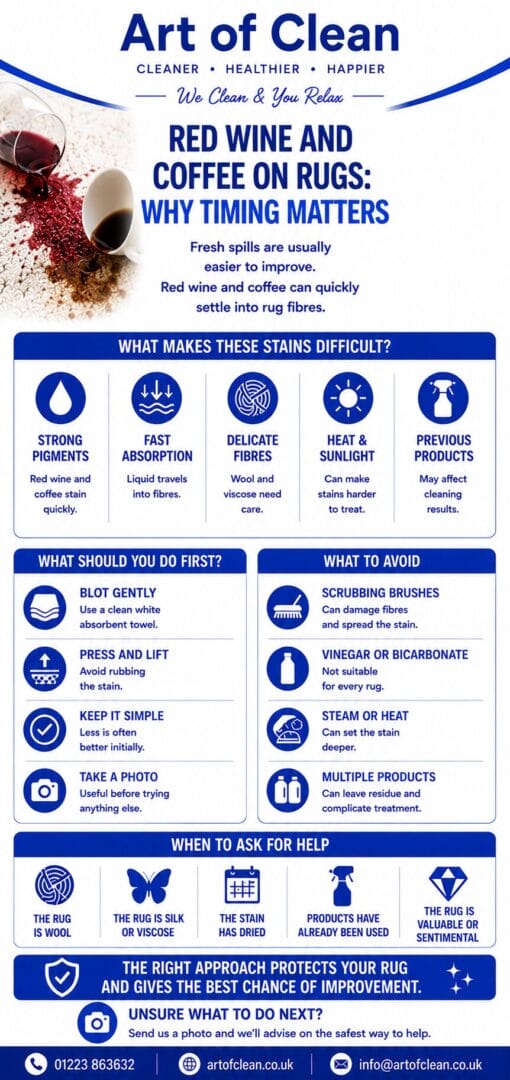
These stains are not just surface dirt. Red wine and coffee both contain strong colour pigments called tannins. Once those pigments start to settle into the fibres, they can become much harder to reduce.
That is why timing matters so much.
A fresh spill gives us more chance to help. An older stain may still improve, but it is harder to treat because the colour can bond deeper into the rug. What happens next, and what is used on the stain before we see it, can make a real difference.
Why red wine and coffee stains can be stubborn
Red wine leaves a strong colour because of the natural pigments in the drink. Coffee can be just as awkward, especially if it was hot, strong, milky or sugary.
On a rug, those liquids can move quickly through the fibres. They may not stay neatly where the spill first landed. Depending on the rug, the stain can spread, dry unevenly or leave a darker edge.
The result depends on the fibre, the age of the stain, the dye stability of the rug and whether anything has already been used on it. A wool rug, a viscose rug and a synthetic rug may all react differently. That is why stain advice has to be careful rather than one-size-fits-all.
What to do first after a fresh spill
If the spill has just happened, keep things simple.
Blot the area gently with a clean, absorbent white towel. Press down and lift. Move to a dry part of the towel each time so you are lifting moisture away from the rug rather than moving it around.
Try not to rub. Rubbing can push the liquid deeper, disturb the pile and spread the stain.
Avoid heat, steam cleaners, scrubbing brushes and strong stain products. It is also best not to soak the rug. Too much moisture can cause other problems, especially on rugs with delicate fibres, unstable dyes or absorbent backing.
If the rug is wool, silk, viscose, antique, inherited or sentimental, stop after careful blotting and ask for advice before adding anything else.
Why old red wine and coffee stains are harder
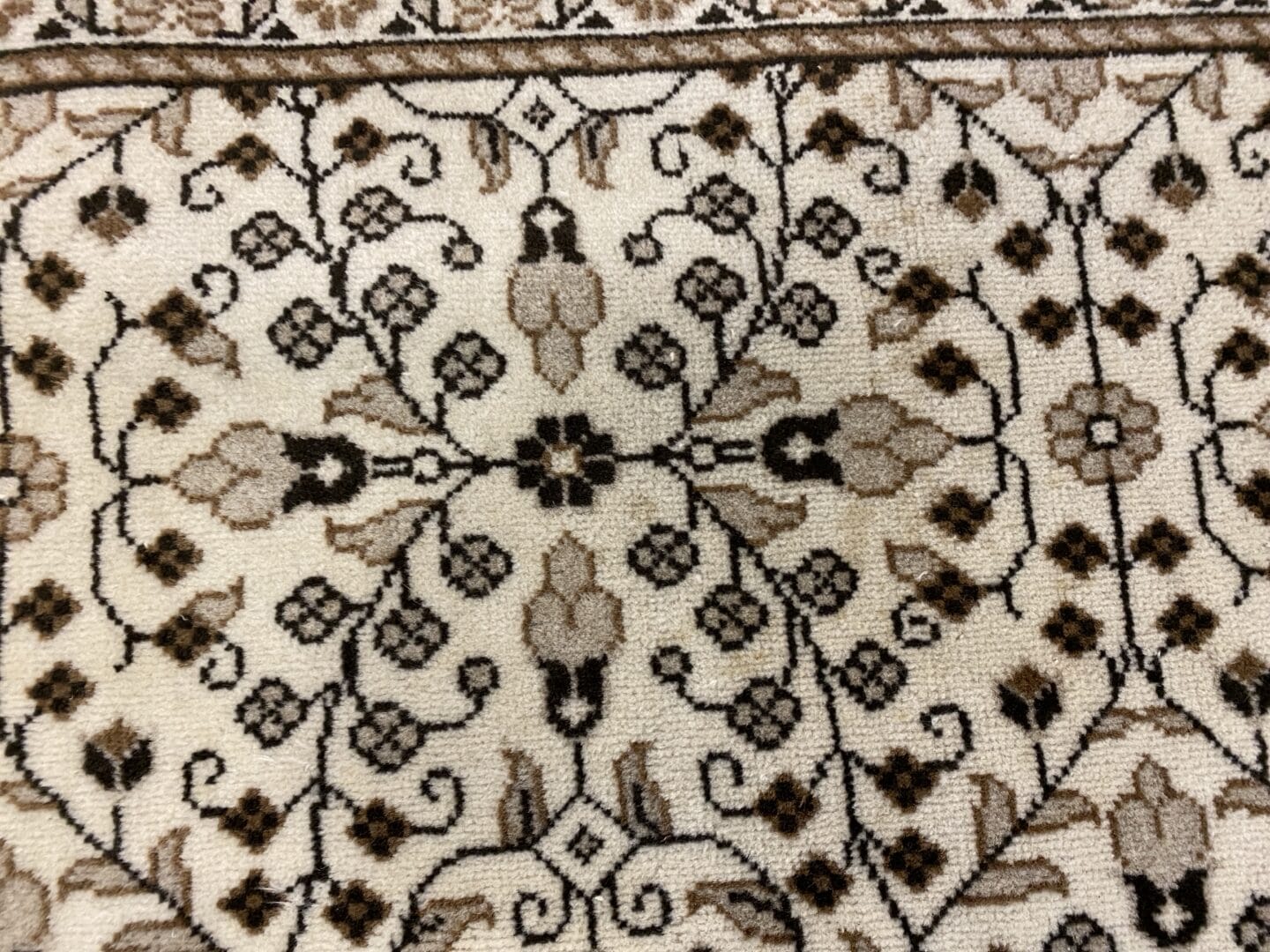
Older stains are usually more difficult because the colour has had longer to attach to the fibres.
By the time a stain has dried, it may have travelled deeper into the rug. It may also have been walked on, warmed by sunlight or treated with a household product. Each of those things can change what is realistic.
Sometimes we can make a strong improvement. Sometimes the stain will reduce, but not disappear fully. Occasionally, the mark has become permanent. A proper inspection helps us judge this before giving expectations.
Be careful with quick fixes
Many stain tips online are not written for rugs. They may be intended for washable fabrics, hard-wearing synthetic carpets or general household spills.
Rugs need more caution.
Salt, vinegar, washing-up liquid, bicarbonate of soda, stain sprays and carpet spotters can all cause trouble on the wrong rug. They may leave residue, affect colour, spread the stain or make the area sticky. Some products can also make later professional treatment harder.
Most people only use these things because they are worried and trying to act quickly. That is completely understandable. With red wine and coffee, though, it is often safer to pause after blotting rather than keep trying different products.
What we check before treating the stain
Before treating a red wine or coffee stain, we would want to understand the rug first.
The team would usually look at the fibre, construction, dye stability, backing and fringe condition. We would also ask when the spill happened and what, if anything, has already been used.
That matters because rugs are not all cleaned in the same way. Some can be treated more confidently. Others need a gentler approach. Some are better assessed and cleaned offsite, where there is more control over dusting, rinsing, extraction and drying.
This careful checking does not guarantee stain removal, but it does give the rug a safer and more realistic route.
Can red wine and coffee stains be removed?
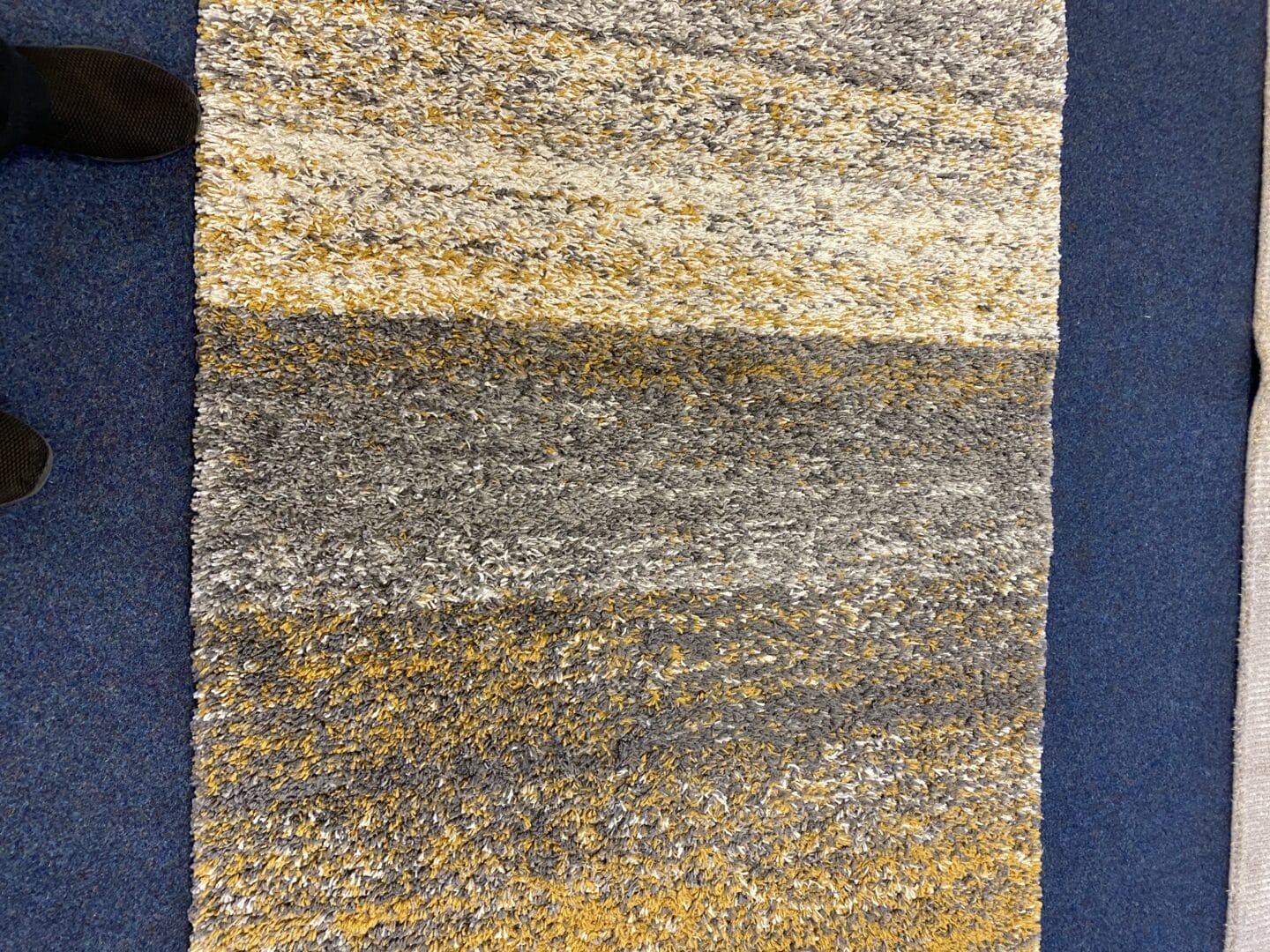
Sometimes, yes. Sometimes they can only be improved.
A fresh coffee spill on a robust, colourfast rug is very different from an old red wine mark on a delicate wool or viscose rug. Previous stain products, rubbing or heat can also limit the result.
The aim is to improve the rug safely. Chasing a perfect result is not worth it if the treatment risks damaging the fibres or moving the dyes.
When to ask for help
Ask for advice quickly if the rug is valuable, delicate, sentimental or made from wool, silk or viscose. It is also worth asking before using a second product if the first one has not helped.
A clear photo is useful. So is knowing what was spilled, when it happened and what has already been tried.
If you are in or around Cambridge and have a red wine or coffee stain on a rug, send us a photo or talk it through with the team. We can help you understand what looks realistic, what to avoid and whether the rug should come in for professional cleaning.
FAQs
Can red wine be removed from a rug?
Sometimes red wine can be removed, but it depends on the rug fibre, dye stability, age of the stain and what has already been used. A fresh spill is usually easier to improve than an older stain. On delicate rugs, it is safer to ask for advice before using stain products.
Can coffee stains come out of rugs?
Coffee stains can often be improved, especially if they are dealt with quickly. Older coffee stains may be harder because the colour can settle deeper into the fibres. Milk, sugar and heat can also affect how the stain behaves.
What should I do first after spilling red wine or coffee on a rug?
Blot gently with a clean white towel. Press and lift rather than rubbing. Avoid heat, steam cleaners, scrubbing and strong stain products. If the rug is wool, silk, viscose, antique or sentimental, stop after blotting and ask for advice.